
What Is PRP/PRF Therapy and How Does It Use Your Own Body to Rejuvenate Your Skin in Mesa?
If you’ve been researching natural ways to improve your skin without relying on synthetic fillers or neurotoxins, you’ve probably come across PRP and PRF therapy. In short, both treatments draw on your body’s own healing biology — specifically the growth factors found in your blood — to stimulate collagen production, improve skin texture, and support tissue renewal. For Mesa residents looking for a more biologically grounded approach to rejuvenation, these treatments offer something that’s genuinely different from most medspa services on the market.
What’s worth knowing upfront is that PRP (platelet-rich plasma) and PRF (platelet-rich fibrin) are not the same thing, even though they’re often grouped together. Understanding the distinction will help you have a more productive conversation with your provider and set more realistic expectations for your results.
PRP vs. PRF: What’s Actually Different?
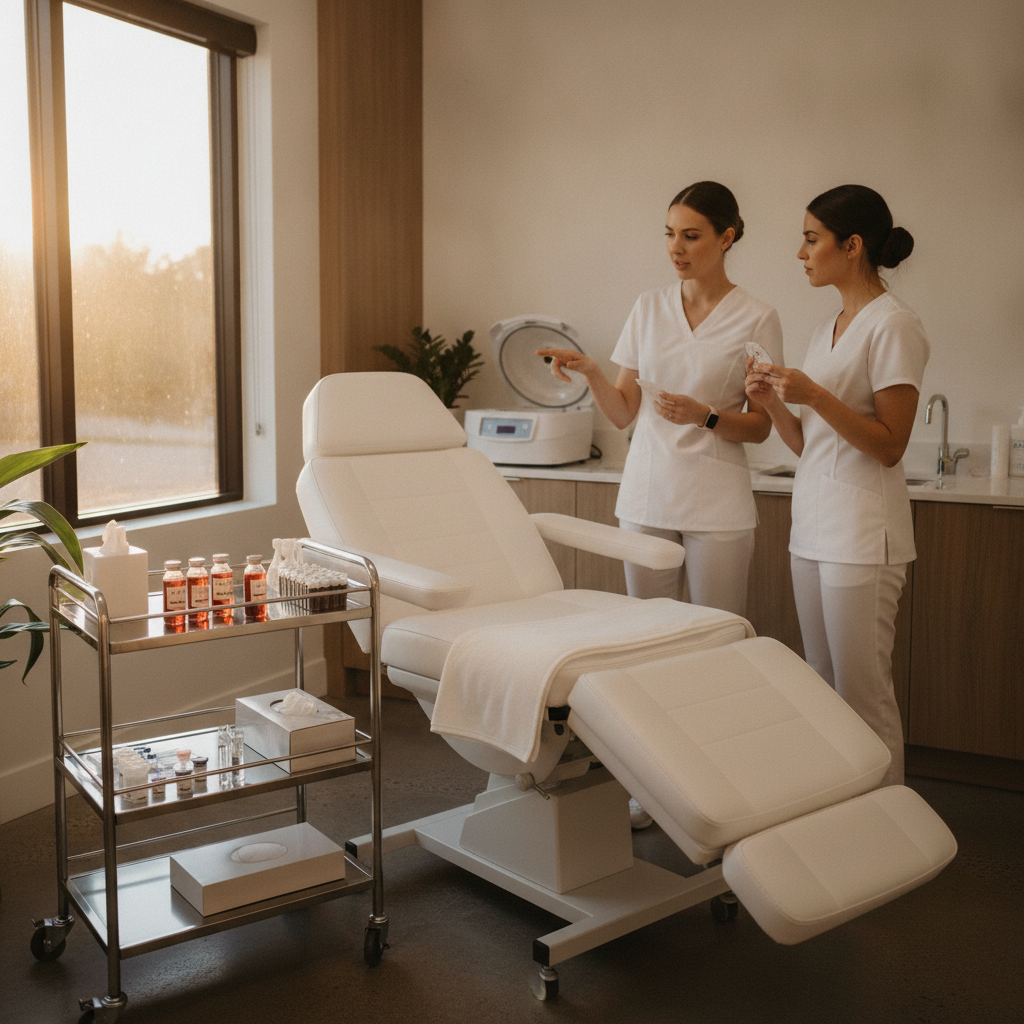
Both treatments start the same way: a small amount of your blood is drawn, much like a standard lab draw. That blood is then placed in a centrifuge and spun at high speed to separate its components. The key difference lies in how that spinning is done and what ends up in the final product.
PRP (platelet-rich plasma) is processed at a higher spin speed, which separates the platelets from most of the other blood components and suspends them in plasma. It has a liquid consistency and has been used in both medical and aesthetic settings for many years.
PRF (platelet-rich fibrin) is processed more gently — at a lower centrifuge speed, without anticoagulants — which preserves a fibrin matrix along with the platelets and a higher concentration of growth factors and white blood cells. Because of this fibrin scaffold, PRF releases its growth factors more slowly over time, which many providers consider an advantage for sustained collagen stimulation. PRF also has a slightly thicker, gel-like consistency when prepared correctly, which can make it particularly useful for certain applications like under-eye hollows and scalp treatments.
Neither treatment introduces a foreign substance into your body. That’s a meaningful distinction for patients who are cautious about synthetic ingredients or who have sensitivities to certain injectables.
What Conditions Can PRP and PRF Actually Help With?
This is where a lot of online content falls short — it’s vague. Here’s a more specific breakdown of what these treatments are commonly used for in aesthetic practice:
- Skin texture and tone: Microneedling with PRP or PRF applied topically (or injected superficially) can help address rough texture, enlarged pores, and overall dullness — particularly useful for East Valley residents dealing with cumulative sun damage from the Arizona climate.
- Fine lines and early volume loss: PRF injected into areas like the under-eye region, temples, or around the mouth can help restore subtle volume and improve skin quality over time, without the more dramatic effect of a traditional filler.
- Under-eye concerns: The under-eye area is one of the most discussed applications of PRF specifically. Because PRF has a thicker consistency and releases growth factors gradually, it can be injected carefully to address hollowness and thin, crepey skin beneath the eyes — an area where many patients feel wary of using conventional hyaluronic acid fillers.
- Hair restoration: Scalp injections of PRP or PRF are used to support hair follicle health and may help slow certain types of hair thinning. This application is popular with both men and women across the East Valley, particularly alongside other wellness programs.
- Paired with other treatments: PRP and PRF are frequently used in combination with RF microneedling, laser resurfacing, or other collagen-stimulating procedures to enhance and extend results.
If you’re already exploring RF microneedling as a treatment for texture or laxity, adding PRF to that session is worth discussing with your provider — it’s one of the more popular pairings in the East Valley right now.
What a PRP or PRF Session Actually Looks Like
This is a piece of the conversation that competitor medspa websites in the Gilbert and Chandler area frequently skip over, which leaves prospective patients with a lot of unanswered questions. Here’s what you can realistically expect:
A typical appointment runs between 45 minutes and an hour, depending on the treatment area and whether it’s being paired with another service. After your blood is drawn and processed (which takes roughly 10–15 minutes), the resulting PRP or PRF is either applied topically during microneedling or injected into the treatment area using fine needles. A topical numbing cream is typically applied beforehand to keep you comfortable.
Redness and mild swelling are normal for the first day or two, especially if you’re combining it with microneedling. Most patients are comfortable returning to everyday activities within a day, though you’ll want to protect your skin from the Arizona sun carefully during the healing window — something your provider should walk you through in detail.
Results from PRP and PRF are not immediate in the way a neurotoxin or filler might be. Because the mechanism is collagen stimulation rather than volume replacement, improvement tends to appear gradually over several weeks to a few months. Most people benefit from a series of treatments — often two to four — spaced about four to six weeks apart, followed by periodic maintenance sessions.
Who Is a Good Candidate — and Who Might Not Be?
PRP and PRF tend to work best for patients who are in generally good health, have realistic expectations about gradual improvement, and are interested in supporting their skin’s own regenerative processes rather than seeking immediate dramatic change. They’re often a strong choice for patients who want to enhance the results of other treatments they’re already receiving, or for those who prefer to avoid synthetic ingredients wherever possible.
Candidacy does involve a few considerations. Certain medications — particularly blood thinners — may affect platelet function and require a conversation with your provider before proceeding. Patients with some clotting disorders or active infections in the treatment area are typically not candidates. A thorough consultation is the right place to sort all of this out, and any reputable medspa should prioritize that conversation before scheduling your first session.
At Az Laser Studio & Medspa, the clinical team takes a consultation-first approach to every treatment — including PRP and PRF therapy. That means you’ll have the opportunity to discuss your skin concerns, your medical history, and your goals before anything is recommended or scheduled.
Why This Treatment Category Is Easy to Get Wrong Without the Right Provider
PRP and PRF therapy have gained significant attention in recent years, which means they’ve also attracted providers who offer them without the training or clinical oversight to do them well. The processing technique matters — centrifuge speed, tube type, and timing all affect the quality of the final product. Injection technique matters even more, particularly for delicate areas like the under-eye region or the scalp.
In the East Valley’s increasingly crowded medspa market, it pays to ask direct questions: Who is performing the treatment? What is their clinical background? Is there a medical director overseeing the practice? These are the same questions worth asking about any injectable service, and the answers should be straightforward if the provider is operating with appropriate oversight. You can learn more about the clinical team at Az Laser Studio & Medspa on the about us page.
Frequently Asked Questions About PRP and PRF in Mesa
Is PRP or PRF painful?
Most patients find both treatments very tolerable. A blood draw is involved at the start, and numbing cream is applied before injections or microneedling. Some mild discomfort, redness, or swelling is normal after the session but typically resolves within a day or two.
How many sessions will I need to see results?
Most providers recommend a series of two to four sessions spaced four to six weeks apart, followed by maintenance treatments. Results build gradually over several months as collagen stimulation progresses — this isn’t a one-and-done treatment.
Can I combine PRP or PRF with other medspa treatments?
Yes, and it’s actually one of the most common ways these treatments are used. Pairing PRF with RF microneedling or laser resurfacing is popular in the East Valley because the combination can extend and deepen results. Your provider will help you sequence treatments appropriately based on your skin and timeline.
Is there a difference between the “vampire facial” I’ve seen online and PRP/PRF therapy?
The “vampire facial” term refers specifically to microneedling with PRP applied topically — it became widely known after celebrity coverage years ago. PRP and PRF therapy is the broader category, which includes that application as well as injections for the under-eye area, face, scalp, and other areas. The terminology can be confusing, so it’s worth asking your provider exactly what approach they’re recommending for your specific concerns.
How soon before a big event should I schedule PRP or PRF?
Because redness and mild swelling can follow a session — and because results develop gradually rather than immediately — PRP and PRF are not last-minute treatments. Plan to complete your final session at least four to six weeks before any major event, and schedule your initial consultation well in advance of that window.
If you’re curious whether PRP or PRF therapy is a good fit for your skin goals, the best next step is a conversation with a qualified provider. Contact Az Laser Studio & Medspa to request a free consultation and find out whether this treatment — or a combination approach — makes sense for where you are right now.