
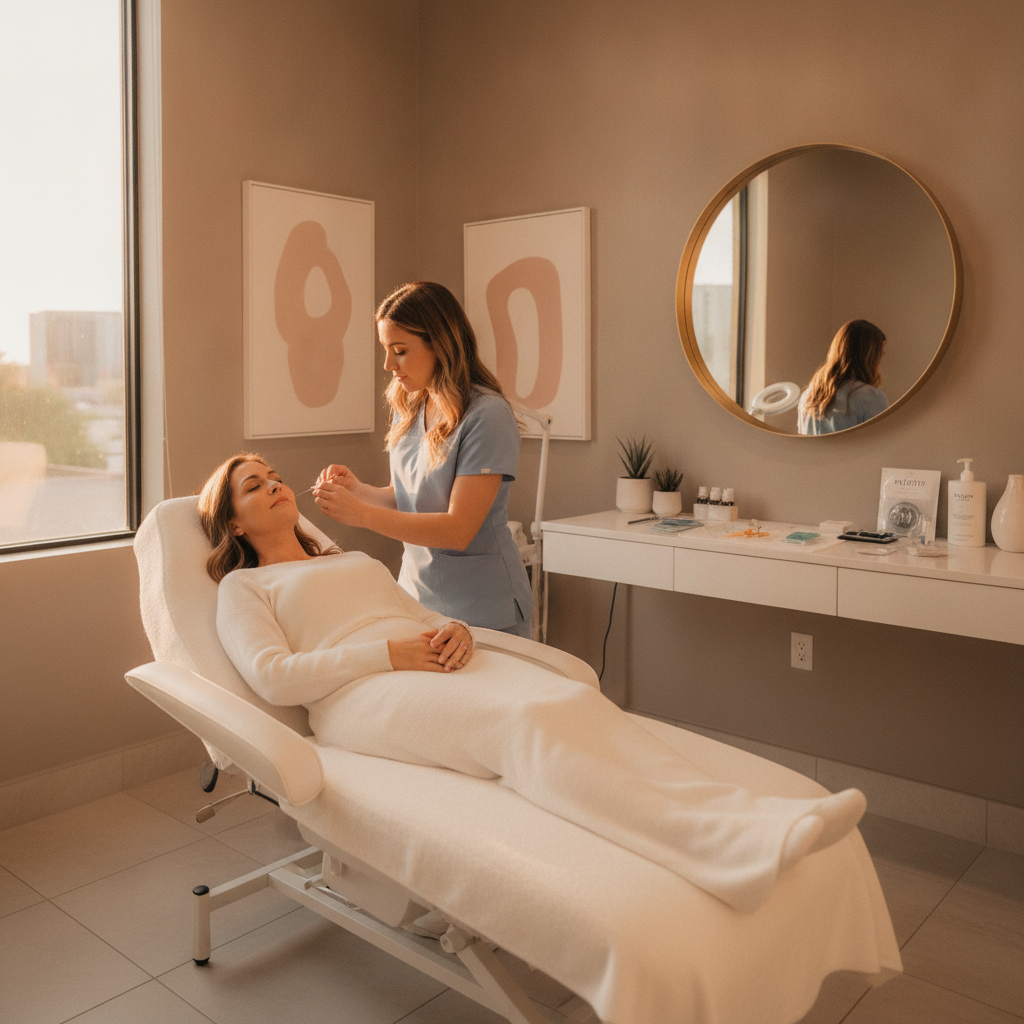
What Are PDO Threads — and Are They a Good Alternative to a Facelift for Men and Women in Mesa and Gilbert?
If you’ve noticed that your jawline isn’t as defined as it used to be, or that the skin along your cheeks seems to sit a little lower than it once did, you’re not imagining things — and you’re not alone. Skin laxity is one of the most common concerns that brings men and women into our Mesa studio, and it’s one of the trickier things to address without surgery. PDO thread lifts are one of the most effective non-surgical options available right now, and they remain one of the least well-explained treatments across most East Valley medspas. If you’ve heard the term and wondered whether it’s right for you, here’s a straightforward breakdown of what PDO threads actually are, who tends to do well with them, and what you can realistically expect from the process.
What Are PDO Threads, Exactly?
PDO stands for polydioxanone — the same type of absorbable suture material that has been used in surgery for decades. In a thread lift procedure, very fine threads made from this material are carefully inserted beneath the skin using a thin needle or cannula. Depending on the type of thread used, the goal is either to physically reposition tissue (lifting threads with small barbs or cones that anchor into place) or to stimulate your body’s natural collagen production around the thread itself (smooth or twisted threads used more for texture and tightening).
Over the following weeks and months, your body gradually dissolves the threads — but the collagen that forms around them stays. That’s what makes PDO threads different from a filler or a neurotoxin: the results continue to develop after the procedure, and the improvement you see at six months is often better than what you saw at six weeks.
How Is a Thread Lift Different From a Surgical Facelift?
It’s worth being honest here: a surgical facelift produces more dramatic, longer-lasting results than a thread lift. If you have significant jowling or a large amount of excess skin, surgery may be the more appropriate conversation — and a good medspa provider will tell you that directly rather than oversell what threads can do.
That said, most people seeking a thread lift aren’t facelift candidates and don’t want to be. They’re dealing with mild to moderate skin laxity — the early softening of the jawline, a subtle drooping of the brow or midface, or a loss of that angular definition along the lower face — and they want a real improvement without general anesthesia, a long recovery, or significant downtime. PDO threads fit that profile well.
Compared to surgery, a thread lift involves:
- No general anesthesia — local numbing is used at the treatment site
- No incisions or visible scarring
- Minimal downtime — most clients return to normal activity within a few days, though some mild swelling or tenderness is common
- Results that develop gradually over several weeks
- Effects that typically last one to two years depending on the type of threads used and your skin’s collagen response
Who Is a Good Candidate for PDO Threads in the East Valley?
Thread lifts tend to work best for men and women in their late 30s through 50s who are beginning to notice the early signs of facial sagging but still have reasonable skin quality. The ideal candidate has good skin elasticity — enough that the tissue can be repositioned and held — but is concerned about the direction things are heading.
Common treatment areas include:
- The jawline and jowl area
- The cheeks and midface
- The brow and lateral forehead
- The neck (a subtler lift along the lower neck and platysmal area)
- Nasolabial folds and marionette lines
If you’ve already had significant volume loss in the midface, PDO threads are often combined with dermal fillers like Sculptra or Radiesse to restore structure first, then lift and refine. This combination approach is increasingly common and tends to produce more balanced, natural-looking results than either treatment alone.
What the Procedure Actually Involves — No Sugar-Coating
This is the section that’s missing from most competitor content in the East Valley, and it matters. Many medspas list PDO threads as a service without explaining what the actual experience is like. Here’s what to expect at a consultation-first practice like ours.
Your provider will start with a thorough assessment of your facial anatomy, skin quality, and goals. PDO thread placement is highly individualized — the number of threads, the type used, and the insertion points all vary based on your specific structure. There’s no one-size-fits-all protocol, and you should be cautious of any provider who quotes you a thread count without examining your face first.
On the day of your treatment, the area is cleaned and numbed with a topical or local anesthetic. The threads are then inserted with a needle or blunt cannula, positioned carefully, and gently anchored. Most appointments take between 45 and 90 minutes depending on how many areas are being treated. You may feel some pressure during placement, but it’s generally well-tolerated.
Afterward, you’ll likely have some swelling, mild bruising, or tenderness — especially in the first three to five days. Most clients take a long weekend and are presentable within a week. Strenuous exercise, facial massage, and sleeping on your stomach should be avoided for the first week or two while the threads settle.
How Many Threads Will You Need — and What Does It Cost?
Thread counts vary considerably depending on the area and the degree of lift desired. Jawline treatments might use anywhere from four to ten threads per side; a full midface and brow treatment could involve more. Your provider should walk you through the treatment plan and the associated cost at your consultation, and a reputable medspa won’t pressure you into a specific number before evaluating you properly.
Thread lifts are a mid-range investment in the medspa world — more than neurotoxins or most facials, but significantly less than surgical alternatives. Financing options like Cherry are available at Az Laser Studio & Medspa for clients who’d prefer to spread the cost over time, which makes this treatment more accessible for many Gilbert, Chandler, and Mesa residents who are budgeting thoughtfully.
How PDO Threads Fit Into a Broader Treatment Plan
One of the things that distinguishes a thoughtful medspa from one that’s just selling services is how treatments are positioned relative to each other. PDO threads work well as a standalone treatment, but they’re often even more effective when paired strategically.
For example, many clients combine threads with RF microneedling to improve overall skin quality and thickness — which helps support the thread lift results over time. Others add neurotoxins like Botox or Dysport to relax the muscles that pull downward on the treated areas, effectively prolonging the lift. The right combination depends entirely on your skin, your goals, and the sequence your provider recommends.
In the Arizona desert climate, it’s also worth noting that ongoing sun protection and skin maintenance play a real role in how long your results hold. Clients who invest in medical-grade skincare and periodic maintenance treatments consistently see better longevity from their thread lifts than those who don’t.
Frequently Asked Questions About PDO Threads in Mesa and Gilbert
Are PDO thread lifts safe?
PDO threads have been used in aesthetic medicine for many years and are considered well-established when performed by a trained, licensed provider. Like any procedure, they carry risks — including bruising, infection, thread visibility, or asymmetry — which is why provider experience and proper technique matter significantly. Always ask about your provider’s credentials and whether the practice operates under physician oversight.
How long do PDO thread results last?
Most lifting threads provide visible results for one to two years. Smooth collagen-stimulating threads may last slightly less time in terms of lift but contribute to ongoing skin quality improvements. Individual results vary based on skin type, age, lifestyle, and how many threads were used.
Can PDO threads be combined with Botox or filler?
Yes, and this combination is common. Your provider will guide you on timing — in some cases, filler and neurotoxins are placed at the same appointment; in others, it makes more sense to space treatments out. A thorough consultation will address this based on your specific plan.
Is there a best time of year to get PDO threads in Arizona?
Thread lifts don’t have the same seasonal restrictions as laser treatments, but many East Valley clients prefer fall and winter appointments when the heat is less intense and sun avoidance is easier to manage during recovery. The influx of snowbird visitors in the Mesa area also creates increased demand in winter months, so booking ahead is a good idea if you’re planning a cool-season treatment.
I’ve heard threads can look unnatural. Is that true?
Overly aggressive placement or using too many threads can create an unnatural appearance — and that’s exactly why the consultation and provider skill matter so much. When done conservatively and with careful attention to facial anatomy, thread lifts should look like a refreshed, rested version of you, not a pulled or artificial result. A good provider will show you before-and-after photos, explain their approach, and prioritize results that fit your face.
Ready to Find Out If PDO Threads Are Right for You?
PDO threads are one of the more nuanced treatments in the non-surgical aesthetic space — and they deserve a more thorough conversation than a two-sentence listing on a services page. At Az Laser Studio & Medspa in Mesa, our team takes the time to assess your anatomy, explain your options honestly, and build a treatment plan that makes sense for your goals and your budget. Whether you’re exploring threads on their own or thinking about how they might fit alongside other treatments, we’d love to help you think it through.
Schedule your free consultation today and find out whether a PDO thread lift is the right next step for you.