
What Is Semaglutide Skin Sag — and What Can Mesa Residents Do About Loose Skin After Rapid Weight Loss?
If you’ve lost a significant amount of weight through a GLP-1 program — whether that’s semaglutide, tirzepatide, or another physician-supervised option — congratulations are genuinely in order. That’s a meaningful health achievement. But many Mesa residents who’ve gone through rapid weight loss are now noticing something unexpected: skin that seems to hang or sag in places where the fat used to be. It doesn’t tighten on its own the way they hoped, and it doesn’t respond to workouts or skincare routines. This phenomenon has picked up the informal label “Ozempic face” or “semaglutide skin sag” in popular media, though it applies to any area of the body where significant volume loss has occurred. The good news is that non-surgical options for addressing it have improved considerably — and you don’t need to go under the knife to see real results.
Why Does Rapid Weight Loss Cause Loose Skin?
Your skin is remarkably elastic, but that elasticity has limits. When you carry extra weight for an extended period, the skin stretches and adapts over time. Collagen and elastin — the structural proteins that give skin its firmness and snap — gradually diminish, especially after age 30 and especially in a climate like Arizona’s, where sun exposure accelerates collagen breakdown year-round. When fat is lost quickly (as often happens with GLP-1 medications, which can produce significant weight loss over a relatively short window), the skin doesn’t always have enough time or remaining elasticity to contract and conform to your new body shape.
The result is skin laxity — loose, crepey, or sagging tissue in areas like the abdomen, upper arms, inner thighs, jawline, and neck. For residents across the East Valley, this is showing up as an increasingly common concern at medspa consultations, particularly as medical weight loss programs have grown substantially in the past two years. What’s less commonly discussed — and what most competitor medspa sites in the Mesa area haven’t addressed directly — is what you can actually do about it from a non-surgical standpoint, and what realistic expectations look like.
What Non-Surgical Options Actually Help With Post-Weight-Loss Skin Laxity?
Not every treatment is equally effective for skin laxity after weight loss. The key is stimulating your skin to produce new collagen and elastin from the inside out — not just treating the surface. Here are the approaches most relevant for people dealing with this specific concern.
Radiofrequency Skin Tightening (NuEra RF)
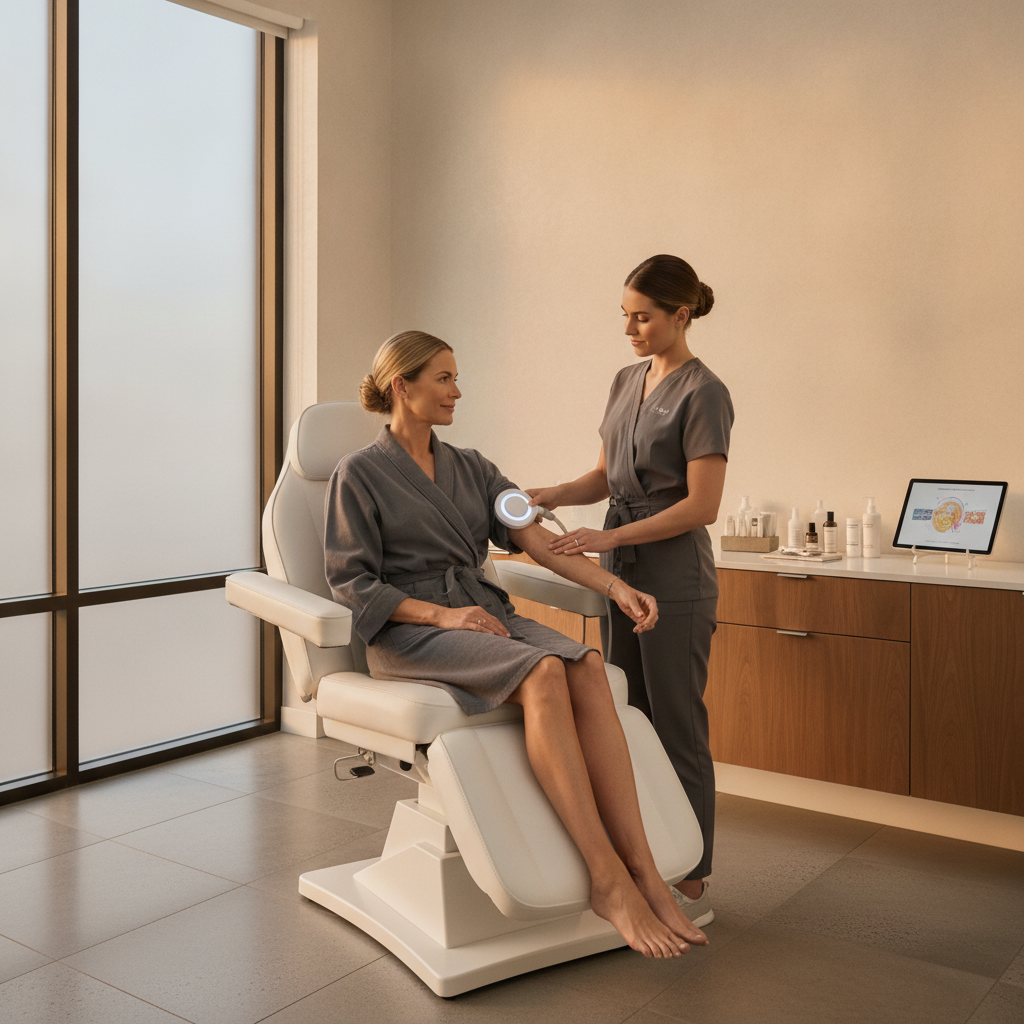
Radiofrequency-based body contouring delivers controlled heat energy into the deeper layers of skin and underlying tissue, which triggers a collagen-remodeling response. At Az Laser Studio & Medspa, we use the NuEra RF system for body contouring and skin tightening, which allows providers to treat larger areas like the abdomen, flanks, arms, and thighs — exactly the zones where post-weight-loss laxity tends to show up most. Sessions are comfortable, require no downtime, and work gradually over a series of treatments. Most clients in the Mesa and Gilbert areas see the best results after four to six sessions, spaced a few weeks apart, with continued improvement over the following months as collagen production ramps up.
It’s worth being honest here: radiofrequency tightening is not a substitute for a surgical body lift when laxity is severe. But for mild to moderate skin looseness following weight loss, it can produce a noticeably firmer, more contoured appearance — especially when you’re consistent with the recommended series.
RF Microneedling for the Face, Neck, and Décolletage
For skin laxity in the face and neck — the areas most associated with “Ozempic face” — RF microneedling combines the collagen-stimulating effect of microneedles with radiofrequency energy delivered directly into the dermis. This dual mechanism makes it particularly effective for improving skin texture, firmness, and elasticity in areas where volume loss has left the skin looking hollowed or loose. Unlike filler alone, which adds volume, RF microneedling actually works to restructure the skin itself. For many clients who’ve lost weight, a combination approach — some structural support from filler where appropriate, paired with RF microneedling to improve overall skin quality — produces the most balanced, natural-looking outcome.
Dermal Fillers: Restoring Volume Lost Alongside Fat
When weight loss affects the face, it often removes fat from areas where you actually wanted to keep it — the cheeks, temples, and under-eye area. This can accelerate a hollowed or aged appearance that has less to do with wrinkles and more to do with lost structural volume. Strategic use of dermal fillers can restore that lost volume in a way that looks natural and proportionate. This isn’t about adding more volume than you had before — it’s about rebalancing what shifted. A consultation with an experienced injector will help identify whether volume restoration, skin tightening, or a combination approach makes the most sense for your face.
The East Valley Context: Why This Gap Matters Right Now
Medical weight loss programs — including GLP-1 medications — have grown dramatically across Chandler, Gilbert, Queen Creek, and Mesa over the past couple of years. More people are achieving significant weight loss results than at any point in recent memory. But there’s a lag in the conversation about what comes next. Most medspa websites in the area offer generic pages on skin tightening or body contouring without addressing the specific concerns of someone who’s just come off a GLP-1 program. If you’re searching for help with loose skin after semaglutide in the East Valley, you’ve probably noticed that the information is scattered and vague.
At Az Laser Studio & Medspa, we see this as part of a continuum of care. If you started or completed a physician-supervised weight loss program and you’re now looking at the next chapter, the conversation about skin health fits naturally into that journey. We work with clients who are still actively losing weight as well as those who’ve reached their goal weight and are ready to address what’s left behind.
How to Set Realistic Expectations
There are a few things worth understanding before you book a treatment for post-weight-loss skin laxity:
- Results take time. Collagen remodeling doesn’t happen overnight. Most people see gradual improvement over three to six months following a treatment series, not immediate transformation after a single session.
- Severity matters. If you’ve lost 80 or more pounds, non-surgical options will help — but they may not fully resolve significant laxity. A provider will be honest with you about what’s achievable without surgery.
- Maintenance plays a role. Skin quality continues to improve with ongoing collagen support. Some clients do periodic maintenance sessions once or twice a year to sustain results.
- Sun protection is non-negotiable in Arizona. UV exposure degrades collagen continuously in a climate like ours. Protecting your skin daily extends and enhances any treatment results you achieve.
- Combination approaches often outperform single treatments. Pairing RF body contouring with RF microneedling or targeted injectables tends to produce more comprehensive results than any one modality alone.
Frequently Asked Questions
Can I start skin tightening treatments while I’m still losing weight?
It depends on how much more weight you plan to lose. If you’re in the final stages and close to your goal, it’s often fine to begin treatments — your provider can advise based on your individual situation. If you’re still in early weight loss, it generally makes more sense to wait until your weight has stabilized, so that the results of your treatments aren’t undermined by continued volume changes.
How many sessions of NuEra RF will I need for loose skin on my abdomen?
Most clients see meaningful improvement after four to six sessions, spaced two to four weeks apart. Depending on the degree of laxity and your skin’s response, some people benefit from additional sessions beyond that. Your provider will reassess as you go and adjust the plan accordingly.
Is “Ozempic face” only a concern for people who used semaglutide specifically?
No — the facial volume loss associated with GLP-1 medications can happen with any significant or rapid weight loss, regardless of what method you used. It’s a result of losing fat throughout the body, including the face, and it’s been a known side effect of major weight loss long before semaglutide entered the conversation.
Will skin tightening treatments in Mesa work if I have Tempe or Chandler zip code?
Absolutely. Az Laser Studio & Medspa serves clients from across the East Valley, including Tempe, Chandler, Gilbert, Queen Creek, and surrounding communities. Most clients find us easily accessible from the US-60 corridor, and we regularly work with clients who drive in from further out.
Do you offer financing for treatment packages?
Yes — we offer financing through Cherry, which makes it easier to spread out the cost of a treatment series. Many clients find that paying monthly for a package of six sessions is more manageable than paying the full amount upfront, especially when combining multiple treatment types.
Ready to Talk About Your Skin After Weight Loss?
Losing weight is an accomplishment worth celebrating. Addressing what comes after it is just the next step in taking care of yourself — and you don’t have to figure it out alone. The team at Az Laser Studio & Medspa works with clients at every stage of their wellness journey, and we’ll give you a straightforward assessment of what’s achievable for your specific skin concerns without overselling or overpromising. Reach out to us today to schedule a free consultation and find out which treatments make the most sense for where you are right now.