
What Is PRP/PRF Therapy and Is It Worth It? A Gilbert and Mesa Guide to Natural Skin Rejuvenation
If you’ve been researching skin rejuvenation options in Gilbert or Mesa and keep coming across the terms PRP and PRF, you’re not alone — and you probably have real questions about whether any of it actually works. The short answer: yes, PRP and PRF therapy are legitimate, clinically recognized treatments used across medspas and medical practices nationwide, and when performed by an experienced provider, they can meaningfully support skin quality, collagen production, and even early hair thinning. What they aren’t is a magic fix — and that distinction matters when you’re deciding how to spend your time and money.
Here’s what you genuinely need to know before walking into a consultation.
PRP vs. PRF: What’s the Actual Difference?
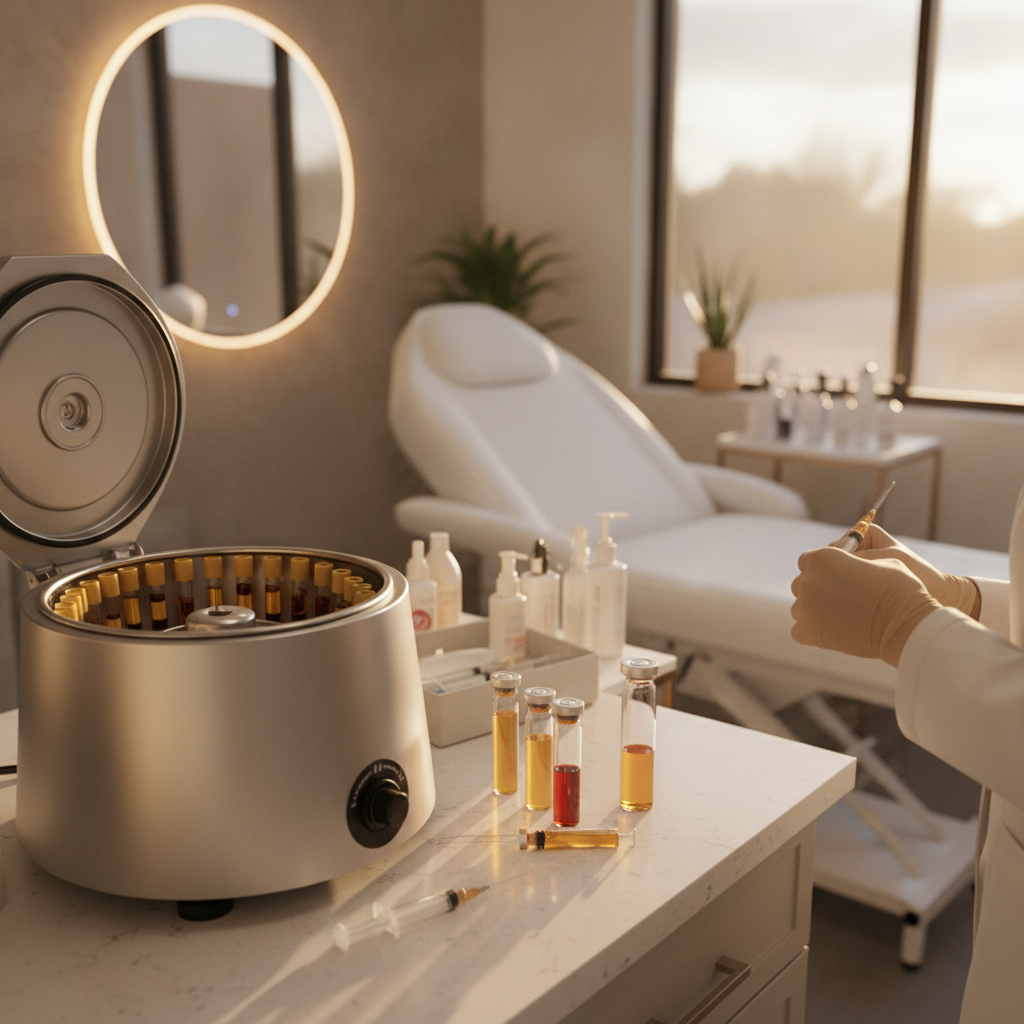
Both treatments start the same way: a small amount of your blood is drawn, placed in a centrifuge, and spun down to separate and concentrate the growth factors naturally found in your platelets. Those growth factors are what do the work — signaling your skin to repair, regenerate, and produce collagen.
The difference comes down to how the blood is processed:
- PRP (Platelet-Rich Plasma) is the first-generation version. It’s processed at a higher spin speed, which separates the plasma quickly but also removes some of the beneficial white blood cells and fibrin. The result is a liquid that’s concentrated in platelets and can be injected or applied topically.
- PRF (Platelet-Rich Fibrin) is the newer, more refined approach. Spun at a lower speed without anticoagulants, PRF retains more growth factors, white blood cells, and a fibrin matrix — essentially a slow-release scaffold that delivers growth factors to your tissue over a longer period. Many providers and clients prefer PRF for this reason.
At Az Laser Studio & Medspa, both options are available, and your provider will help you decide which is the better fit based on your skin concerns and treatment goals.
What Can PRP and PRF Actually Help With?
This is where a lot of online content gets vague. Here’s a clearer breakdown of what these treatments are commonly used for in a medspa setting:
- Skin texture and tone: PRP and PRF stimulate collagen remodeling, which can improve rough or uneven texture over time — particularly helpful for sun-damaged skin, a very common concern here in the East Valley where UV exposure is year-round and intense.
- Fine lines and early volume loss: While these aren’t filler replacements, they can soften fine lines and support skin elasticity, especially when used consistently.
- Under-eye hollows and dark circles: PRF injected under the eyes is one of its most popular applications. The growth factors support collagen in an area where the skin is thin and traditional fillers can sometimes look heavy or unnatural.
- Scalp and hair thinning: Injected into the scalp, PRP/PRF can help support hair follicle health in people experiencing early-stage thinning. This is increasingly requested by both men and women across the Gilbert and Chandler area.
- Post-treatment healing: PRP and PRF are frequently paired with other treatments like RF microneedling to accelerate healing and enhance results.
What a PRP or PRF Session Actually Looks Like
One thing that surprises many first-time clients is how straightforward the experience is. Here’s a realistic rundown of what to expect:
- A small blood draw — typically one to two vials — is taken from your arm, similar to a routine lab draw.
- The sample is spun in a centrifuge for several minutes to separate and concentrate the platelets.
- A topical numbing cream is applied to the treatment area while the centrifuge does its work.
- The concentrated PRF or PRP is then either injected (for under-eye, scalp, or facial rejuvenation) or applied topically during a microneedling session.
- The whole appointment typically takes 45 minutes to an hour.
Downtime is minimal for most people — some redness and light swelling for 24 to 48 hours is normal. Most clients return to their regular routine the next day, though you’ll want to avoid direct sun exposure and hold off on heavy exercise for a day or two.
How Many Sessions Do You Need — and When Do You See Results?
This is an area where competitor sites in the East Valley often fall short. Most will mention PRP/PRF exists, but they rarely give you the realistic picture of what a treatment plan looks like — so let’s be direct about it.
Results from PRP and PRF are gradual, not instant. Because the treatment works by stimulating your body’s own regenerative processes, you’re not going to walk out looking dramatically different. What you’ll notice over four to six weeks is a progressive improvement in skin quality — better hydration, smoother texture, and more evenness in tone. The under-eye area often shows the most noticeable change for people who are good candidates.
A typical protocol looks like this:
- Initial series: Three sessions spaced four weeks apart is a common starting point for facial rejuvenation or scalp treatments.
- Maintenance: Once or twice a year after your initial series to sustain results.
- Combination approach: Many clients in Mesa and Scottsdale pair PRP/PRF with RF microneedling or other treatments for a more comprehensive result. This is worth discussing with your provider at your consultation.
Who Is a Good Candidate — and Who Might Not Be
Because PRP and PRF use your own biological material, the treatment is generally well-tolerated. That said, it’s not the right fit for everyone.
You may be a good candidate if you:
- Have early-to-moderate signs of skin aging, uneven texture, or loss of skin quality
- Are looking for a more natural approach to rejuvenation without synthetic injectables
- Are experiencing early hair thinning and want a conservative, non-pharmaceutical option
- Want to enhance and extend the results of other treatments like microneedling or laser resurfacing
PRP/PRF may not be the best starting point if you:
- Have significant volume loss that would be better addressed with dermal fillers like Sculptra or Radiesse
- Are on blood thinners or have certain clotting disorders
- Have active skin infections or significant inflammatory skin conditions
- Are pregnant
A consultation will always clarify this — a good provider won’t recommend a treatment if it’s not the right match for your situation.
Why Provider Experience Matters More Than You’d Think
Across the Greater Phoenix metro, the number of places offering PRP and PRF has grown quickly. But the quality of the experience — and the result — varies significantly depending on who’s doing it and how the blood is processed. The centrifuge protocol, the concentration achieved, and the injection technique all influence what your body actually gets to work with.
At Az Laser Studio & Medspa, treatments are performed by licensed, experienced injectors under physician oversight. That’s not a small detail — it’s the difference between a treatment that delivers real benefit and one that produces minimal change because the processing wasn’t done correctly. You can learn more about the team’s credentials on our About Us page.
Frequently Asked Questions About PRP and PRF Therapy in Mesa and Gilbert
Is PRF better than PRP?
For most aesthetic applications, PRF is considered the more advanced option because it retains more growth factors and releases them more gradually. That said, both can be effective — your provider will recommend the right one based on your goals and anatomy.
Does PRP/PRF hurt?
Most clients describe the blood draw as the most uncomfortable part. Topical numbing is applied before injections, so the treatment itself is generally well-tolerated. Scalp injections can be more sensitive than facial injections for some people.
How is PRF different from lip filler or Botox?
Botox relaxes muscles to soften dynamic wrinkles. Fillers add physical volume under the skin. PRF doesn’t add anything external — it concentrates your own growth factors and uses them to stimulate your skin’s natural regenerative processes. Many clients use all three as complementary tools, not alternatives.
Can PRP or PRF help with hair loss in men?
Yes — PRP and PRF scalp treatments are used for both men and women experiencing early-stage thinning, including androgenic alopecia (pattern hair loss). Results vary by individual and tend to be most effective when hair follicles are still partially active, which is why earlier intervention often yields better outcomes.
Is financing available for PRP/PRF treatments in Mesa?
Yes. Az Laser Studio & Medspa offers financing through Cherry, making it easier to start a treatment series without paying everything upfront. Ask about options during your consultation.
Ready to Find Out If PRP or PRF Is Right for You?
Whether you’re in Gilbert, Queen Creek, Tempe, or right here in Mesa, a personalized consultation is the best starting point. At Az Laser Studio & Medspa, we take the time to understand your skin, your goals, and your lifestyle before recommending any treatment — so you leave with a plan that makes sense for you, not a generic package.
Contact us today to schedule your free consultation and find out whether PRP, PRF, or a combination approach is the right fit for where you are right now.