
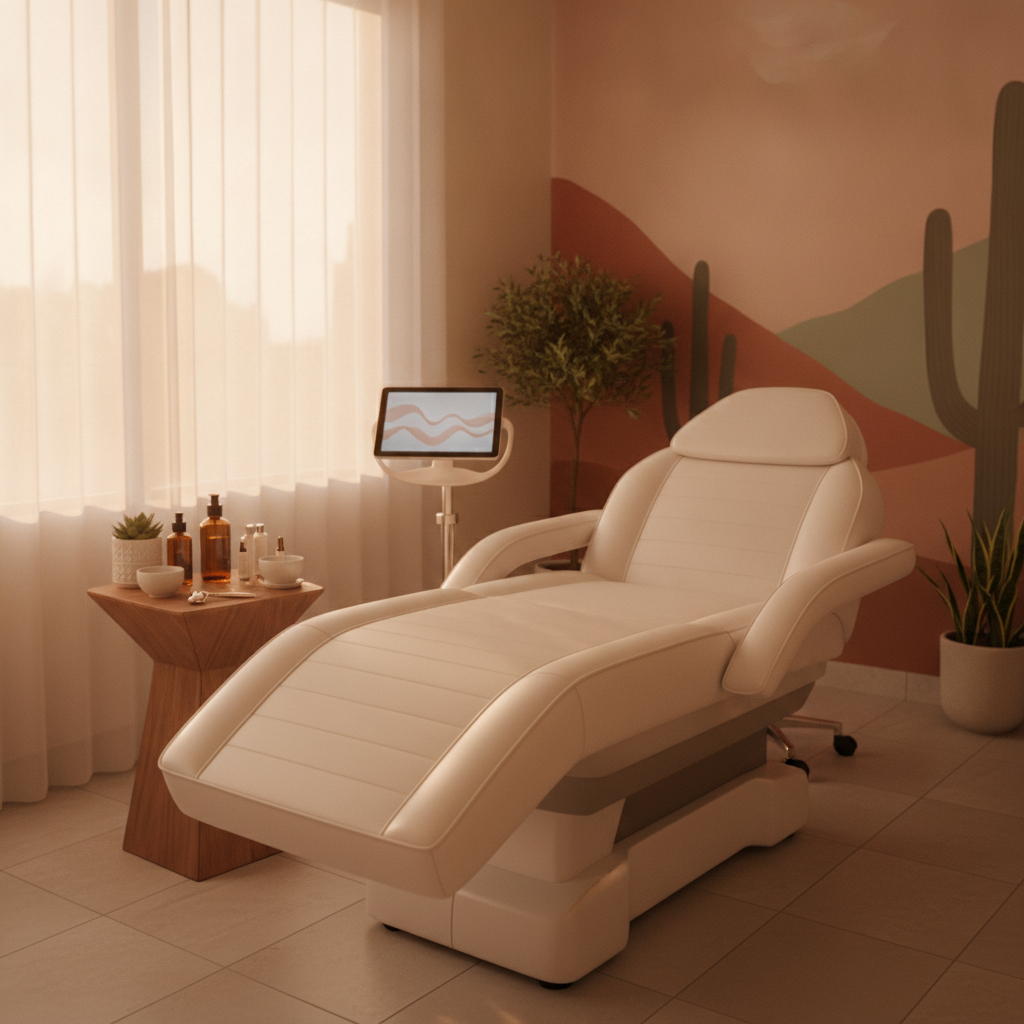
What Is Medspa Treatment for Rosacea in Tempe and Mesa — and What Actually Helps Redness, Flushing, and Visible Vessels?
Yes, there are real medspa treatments that can meaningfully reduce rosacea redness, persistent flushing, and those visible capillaries that makeup just can’t quite cover — and if you live in Tempe, Mesa, or anywhere in the East Valley, managing rosacea here comes with an extra layer of challenge. Arizona’s intense UV exposure, dry desert air, and dramatic temperature swings between scorching summer afternoons and air-conditioned interiors are some of the most consistent rosacea triggers there are. If your face seems to flush or flare more than it did when you lived somewhere else, you’re not imagining it. The good news is that the right combination of professional treatments and a provider who takes your skin sensitivity seriously can make a significant difference in both how your skin looks and how it feels day-to-day.
Why Rosacea Is Different From General Skin Redness — and Why It Matters for Treatment
Rosacea is a chronic skin condition, not just a reaction to a harsh product or a one-time sunburn. It tends to show up as persistent redness across the cheeks, nose, chin, and forehead — sometimes with visible broken capillaries (called telangiectasia), occasional pimple-like breakouts, and a flushing response that gets triggered by heat, spicy food, alcohol, stress, or sun exposure. It’s one of the most common skin concerns among adults in their 30s through 50s, and yet it’s also one of the most underaddressed at local medspas.
When you’re evaluating medspa providers in Mesa or Tempe, you want someone who takes a thoughtful, layered approach — not a one-size-fits-all facial menu. Rosacea-prone skin is reactive skin, and aggressive treatments can actually make things worse if they’re not properly selected and dosed for your skin type. A thorough consultation should come before any treatment recommendation.
Which Medspa Treatments Can Actually Help With Rosacea?
There’s no single treatment that erases rosacea — it’s a condition you manage rather than cure. But the right professional treatments can noticeably reduce the appearance of redness, calm visible vessels, and strengthen your skin’s overall resilience over time. Here’s what a qualified medspa can realistically offer:
IPL (Intense Pulsed Light) for Redness and Visible Vessels
IPL is one of the most well-established treatments for the redness and visible capillaries associated with rosacea. The light energy targets the hemoglobin in dilated blood vessels, breaking them down so the body can gradually absorb and clear them. Over a series of sessions — typically three to five, spaced several weeks apart — most people with rosacea-related redness notice a meaningful reduction in the overall flush and in the appearance of broken capillaries. Because IPL works beneath the skin’s surface, there’s minimal downtime: you might see some temporary darkening of treated areas in the days following a session, but most clients return to normal activities the same day.
IPL is most effective on lighter skin tones, and candidacy does depend on your Fitzpatrick skin type. A good provider will assess this during your consultation and be honest with you if a different approach makes more sense. Learn more about IPL facials at Az Laser Studio & Medspa.
HydraFacial for Sensitive, Rosacea-Prone Skin
If IPL is the targeted treatment for visible vessels, a HydraFacial is the gentler, maintenance-focused complement. The HydraFacial uses a vortex suction tip to cleanse, exfoliate, extract, and infuse the skin with hydrating and antioxidant serums — all without the friction, heat, or abrasion that rosacea skin can’t tolerate. For clients managing rosacea, it can be customized with soothing serums to calm inflammation and strengthen the skin barrier rather than stress it. Many clients with rosacea find that regular HydraFacials help keep their skin more stable between other treatments, reducing day-to-day reactivity.
Medical-Grade Facials and Chemical Peels — With Caution
Chemical peels can be part of a rosacea skin care plan, but they require a thoughtful hand. Aggressive peels with high-percentage acids can easily trigger a flare on reactive skin. What tends to work better for rosacea clients are very low-strength, enzyme-based, or barrier-supportive peels that gently resurface without over-stripping the skin. The key here is working with a provider who understands how to modify the treatment specifically for sensitive skin — not just picking a peel off a menu. At a well-run medspa with a medical team involved in protocol design, this kind of customization is standard practice.
Laser Skin Rejuvenation and CoolPeel
Fractional laser treatments like CoolPeel can address some of the textural changes and sun damage that often accompany long-term rosacea, but they require careful patient selection. Certain laser wavelengths can aggravate rosacea if used incorrectly. This is where provider experience matters enormously — an experienced clinician will know which laser settings and protocols are appropriate for your specific skin presentation, and they won’t push you toward a treatment that could cause more harm than good. During your consultation, don’t hesitate to ask which specific device and settings will be used and why they’re appropriate for rosacea-prone skin.
What Makes Rosacea Management Harder in the East Valley
Living in Mesa, Tempe, Chandler, or Gilbert means contending with rosacea triggers that are genuinely more intense than in most parts of the country. UV index readings in the Greater Phoenix metro are among the highest in North America for most of the year. Heat is an almost daily trigger during Arizona summers. And the dry desert air can compromise the skin barrier that keeps irritants out and moisture in — leaving rosacea-prone skin more reactive and less resilient. For many East Valley residents, managing rosacea is a year-round commitment rather than a seasonal one, which makes having a consistent professional skincare relationship with a local provider that much more valuable.
If you’re new to the area — or if you’re a snowbird who visits during winter months — it’s worth knowing that even cooler Arizona winters bring strong UV and low humidity that can still challenge sensitive skin. Coming in for a consultation when you arrive is a smart way to adjust your skincare plan to what your skin is actually experiencing here.
What to Ask at Your Rosacea Consultation
Before committing to any treatment plan, a good consultation should feel like a real conversation. Here are some questions worth asking your provider:
- Have you treated rosacea clients with a similar skin type and presentation to mine? Experience with reactive, sensitive skin matters — it’s different from treating someone with normal or oily skin.
- What’s your protocol if my skin reacts more strongly than expected? A confident, experienced provider will have a clear answer.
- How will we know the treatment is working, and what does a realistic timeline look like? Managing expectations upfront saves frustration later.
- Can we start conservatively and adjust? For rosacea clients especially, a measured approach is usually smarter than going aggressive from the start.
- Who oversees the treatment protocols here? Look for medspas with a medical director involved in treatment design — not just an aesthetician working independently.
You can review Az Laser Studio & Medspa’s medical team and credentials on the about us page to get a sense of who you’d be working with.
A Note on What Rosacea Treatment Won’t Do
It’s worth being honest about what professional medspa treatments can and can’t do for rosacea. They can reduce visible redness, calm reactive skin, treat visible capillaries, and help your skin tolerate daily life in a desert climate with more resilience. They work best when combined with a simple, barrier-supportive at-home routine — gentle cleansing, broad-spectrum SPF every day without exception, and avoiding your personal triggers. What they won’t do is permanently cure a condition that has underlying genetic and vascular components. The goal is meaningful, lasting improvement in how your skin looks and feels — and for most rosacea clients, that’s exactly what a thoughtful treatment plan delivers.
Frequently Asked Questions: Rosacea Treatment in Mesa and Tempe
How many IPL sessions does it typically take to see improvement in rosacea redness?
Most clients see noticeable improvement after two to three sessions, with more significant reduction in redness and visible vessels after a full series of four to five. Sessions are typically spaced four to six weeks apart to allow the skin to respond and recover between treatments.
Is it safe to get a chemical peel if I have rosacea?
It depends on the peel and your current skin condition. Very gentle, low-strength, or enzyme-based peels can be appropriate for some rosacea clients, but anything aggressive is generally not recommended. Always let your provider know you have rosacea before any peel treatment so they can customize accordingly.
Can IPL make rosacea worse?
When performed by an experienced provider using the right settings for your skin type, IPL is generally well-tolerated for rosacea. However, incorrect settings or treating during an active flare can aggravate symptoms. A thorough consultation and skin assessment before treatment is essential.
How do I find a medspa in Mesa or Tempe that has real experience with rosacea?
Look for providers who ask detailed questions about your skin history, triggers, and previous treatments — not just providers who put you on a standard facial package. Medical director oversight and licensed nursing or nurse practitioner injectors and treatment providers are also signals of a more clinical, personalized approach.
Does the Arizona climate make rosacea worse long-term?
For many people, yes — high UV exposure, heat, low humidity, and dramatic indoor/outdoor temperature swings are all established rosacea triggers. Sun protection is non-negotiable here, and working with a local provider who understands the desert climate impact on skin can help you build a more effective management plan.
Ready to Talk About Your Skin?
If you’ve been managing rosacea on your own and want to explore what professional treatments can actually do for your skin, the first step is a real conversation with a provider who takes sensitive skin seriously. At Az Laser Studio & Medspa in Mesa, we build individualized treatment plans based on your skin, your goals, and what your life in the East Valley actually looks like — not a one-size-fits-all menu. Request your free consultation today and let’s figure out what will work best for you.