
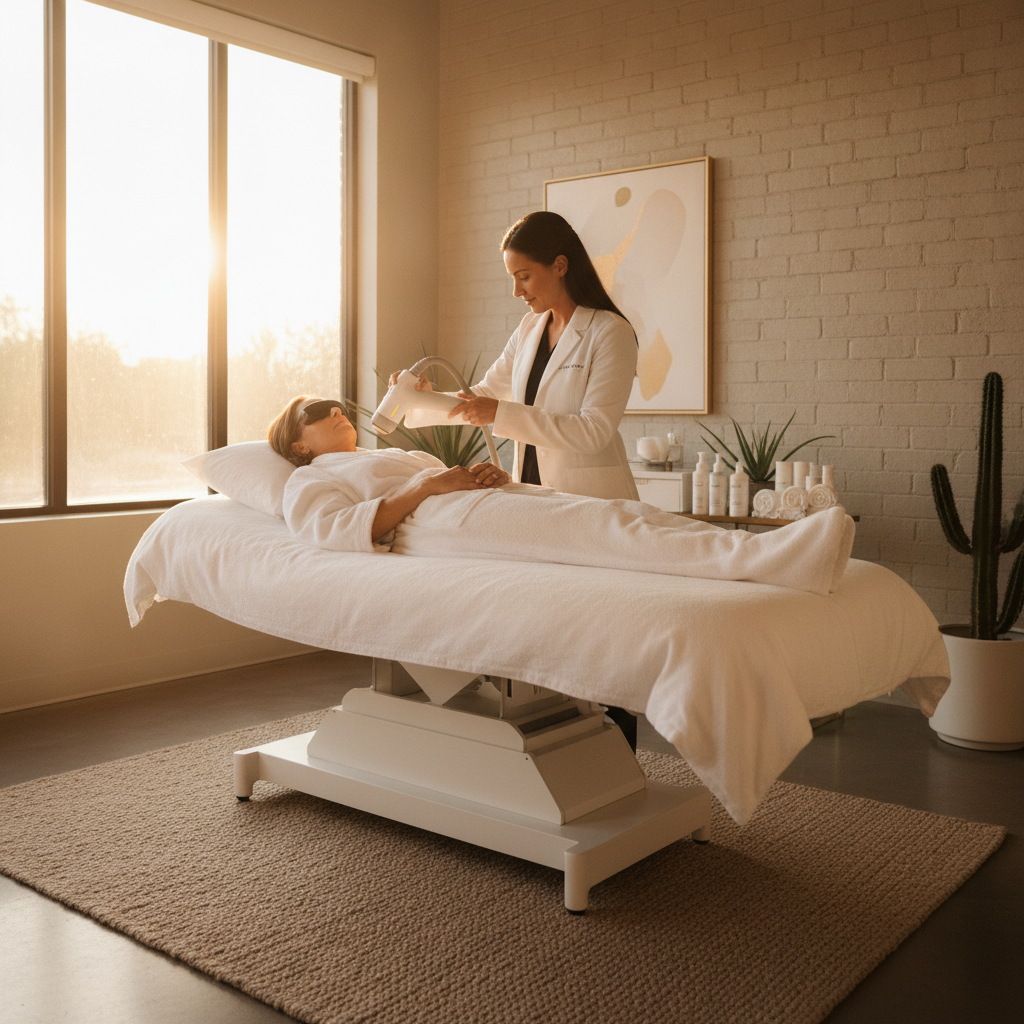
If you’ve lived in Mesa — or anywhere across the East Valley — for more than a few summers, your skin has probably taken a hit. The combination of intense UV exposure, low humidity, and outdoor living leaves a lot of people dealing with brown spots, persistent redness, blotchy patches, and an overall dullness that no over-the-counter product seems to fully address. IPL facial treatment, also called Intense Pulsed Light therapy or a photofacial, is one of the most effective non-invasive options for correcting exactly those kinds of concerns. The short answer: yes, for many people in the Greater Phoenix area, IPL is a genuinely well-suited treatment — but the details matter, and most competitors aren’t giving you nearly enough of them.
What Exactly Is an IPL Facial?
IPL isn’t a laser in the traditional sense. Instead of emitting a single focused wavelength of light, it delivers broad-spectrum light energy across multiple wavelengths. That versatility is what makes it useful for targeting several different skin concerns at once — pigmentation, redness, broken capillaries, and early signs of sun damage can all respond to a single IPL session.
During treatment, a handheld device is passed over the skin, delivering pulses of light that are absorbed by melanin (the pigment in brown spots) and oxyhemoglobin (the pigment in red or flushed vessels). The targeted cells absorb the energy and are gradually broken down and cleared by the body. In the days following your session, you may notice dark spots temporarily darken before they flake away — that’s actually a sign the treatment is working.
Most people describe the sensation as a mild snapping or warming feeling. It’s not painless, but it’s well-tolerated, and sessions typically run 30 to 45 minutes depending on the area treated.
Why Sun Damage Is Such a Specific Problem in Mesa and the East Valley
Arizona averages more than 300 sunny days per year, and that’s not just a selling point for real estate brochures — it’s a dermatological reality. UV exposure in the Phoenix metro is intense and year-round, meaning people here accumulate sun damage faster and earlier in life than in most other parts of the country. Add in the fact that we spend more time in shorts and tank tops simply because the weather demands it, and the skin on your face, chest, hands, and arms can show significant photo-aging by your 30s or 40s.
Brown spots from sun exposure (solar lentigines), diffuse redness from dilated capillaries, and an uneven texture from years of UV exposure are among the most common concerns we hear from clients coming from Gilbert, Chandler, Tempe, and throughout Mesa. IPL is specifically well-suited to this kind of accumulated sun damage — it’s not the right tool for deep wrinkles or significant volume loss, but for pigmentation and vascular concerns, it’s hard to beat.
How Many IPL Sessions Will You Need?
This is where most competitor websites fall short — they mention IPL but give you almost no practical guidance on what a realistic treatment plan looks like. Here’s what you should know going in.
Most providers recommend a series of three to five sessions spaced about three to four weeks apart for initial correction. The exact number depends on the severity of your pigmentation, your skin tone, and whether you’re primarily treating brown spots, redness, or both. After your initial series, maintenance sessions one to two times per year can help keep results looking fresh — especially important in a sun-drenched environment like ours.
One important timing note for Arizona residents: IPL works best when your skin hasn’t been recently tanned. That means late fall through early spring is often the ideal window to start a series, especially if you spend time outdoors. Tanned skin increases the risk of unintended pigmentation changes because the device has difficulty distinguishing between treated pigment and background melanin. A qualified provider will assess your skin at consultation and advise accordingly.
What Skin Concerns Does IPL Actually Address?
IPL is most effective for:
- Sun spots and age spots — flat brown spots from UV exposure on the face, chest, hands, and shoulders
- Diffuse redness and rosacea — generalized facial redness or visible small blood vessels
- Broken capillaries — small red or purple vessels on the nose and cheeks
- Uneven skin tone — blotchy or inconsistent color from years of sun exposure
- Mild texture improvement — some clients notice smoother, more refined skin as collagen production is stimulated
IPL is not a replacement for treatments like RF microneedling if deeper texture issues, scarring, or significant skin laxity are your primary concern. And for wrinkles or volume loss, injectables and fillers are going to do what IPL cannot. That said, many clients benefit from combining IPL with other treatments as part of a broader skin health plan — something your provider can help map out at a consultation.
What to Expect Before, During, and After Your IPL Treatment
Before: You’ll want to avoid self-tanner and limit sun exposure for at least two weeks before treatment. Your provider will review your skincare routine and may ask you to pause certain active ingredients like retinoids. A thorough consultation — not just a quick walk-in — is the right way to start.
During: You’ll wear protective eyewear. The provider applies a cooling gel to your skin and then moves the device across the treatment area in overlapping passes. Most clients find the experience manageable, similar to a light snapping or warm rubber band sensation.
After: Expect mild redness and slight swelling for a few hours, similar to a mild sunburn feeling. Dark spots often look darker for five to seven days before they flake off — this is normal and expected. Sun protection immediately after treatment is non-negotiable. Avoid direct sun exposure and use a broad-spectrum SPF 30 or higher consistently during your treatment series.
Downtime is minimal compared to more aggressive resurfacing options. Most clients return to normal activities the same day or the following morning.
How to Choose an IPL Provider in Mesa vs. Booking Somewhere Else
Not all IPL treatments are created equal, and not all providers are equally qualified to deliver them. Here’s what to look for when you’re evaluating your options in the East Valley:
- Trained, licensed providers — IPL is a medical-grade treatment that should be performed or supervised by a licensed medical professional, not a cosmetologist or aesthetician working without clinical oversight
- A real consultation first — any provider worth booking will assess your skin tone, medical history, and current skincare regimen before recommending IPL
- Honest candidacy assessment — IPL is not appropriate for all skin tones, and a good provider will tell you if another treatment would serve you better rather than just booking you anyway
- Transparent about what the results will look like and over what timeline — if someone promises dramatic transformation after a single session, that’s a red flag
At Az Laser Studio & Medspa, our team takes a consultation-first approach to every treatment. We review your skin, talk through your concerns, and build a plan that makes sense for your goals — whether that’s a standalone IPL facial series or a combination approach with other services.
Frequently Asked Questions About IPL Facial Treatment in Mesa
Is IPL the same as a laser facial?
Not exactly. IPL uses broad-spectrum light across multiple wavelengths, while laser treatments use a single focused wavelength. Both can address pigmentation and other skin concerns, but they work differently and have different ideal use cases. A consultation will help clarify which is the better fit for your skin.
Is IPL safe for darker skin tones?
IPL does require more caution with deeper skin tones because the device targets pigment — and higher concentrations of melanin in the skin can increase the risk of unintended pigment changes. It’s critical to work with a provider who has experience with diverse skin tones and uses appropriate settings. In some cases, an alternative treatment may be recommended.
How long do IPL results last?
Results from a completed IPL series can last one to two years or longer with proper sun protection. In a sun-intensive environment like the East Valley, most providers recommend annual or semi-annual maintenance sessions to keep pigmentation in check.
Can I combine IPL with other medspa treatments?
Yes, and many clients do. IPL pairs well with treatments like HydraFacial, chemical peels, and RF microneedling as part of a broader skin rejuvenation plan. Your provider will advise on appropriate timing and sequencing between treatments.
How much does an IPL facial cost in Mesa?
Pricing varies depending on the treatment area, the number of passes, and the provider. We recommend contacting us directly for accurate pricing based on your specific needs. Financing options are available to make treatment more accessible — we work with Cherry to help clients manage the cost of their aesthetic goals over time.
Ready to See What IPL Can Do for Your Skin?
If you’ve been putting up with brown spots, persistent redness, or skin tone that just doesn’t look like you anymore, it’s worth having an actual conversation with a qualified provider. The East Valley’s sun exposure isn’t going anywhere, but the damage it’s already caused doesn’t have to stay either.
Az Laser Studio & Medspa serves clients throughout Mesa, Gilbert, Chandler, Tempe, and the surrounding East Valley with a consultation-first approach and a medical team focused on results that look natural and suit your skin specifically. Request your free consultation today and let’s talk about what your skin actually needs.