
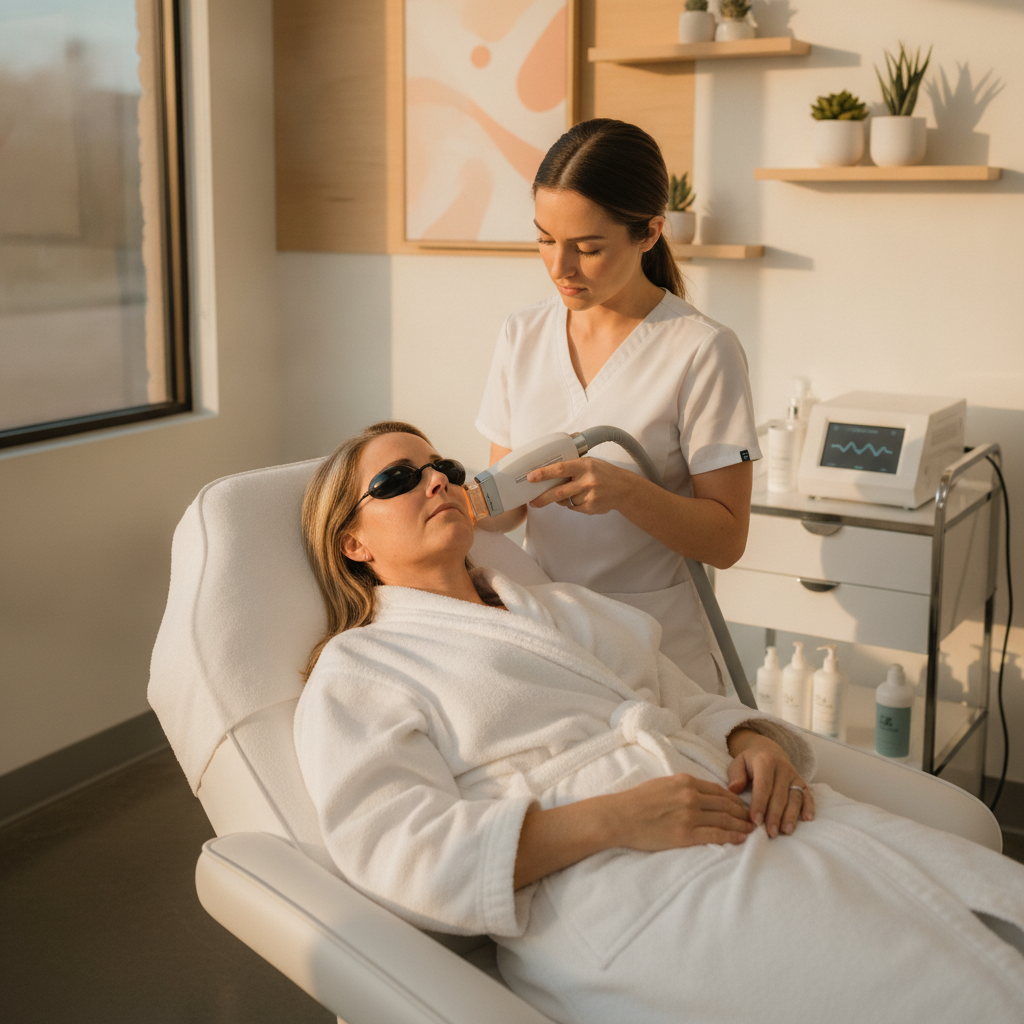
What Is an IPL Facial and Is It the Right Treatment for Redness, Sun Spots, and Uneven Skin Tone in Mesa?
If you’ve spent any real amount of time outdoors in Mesa — and let’s be honest, between the hiking trails, the pool season that stretches from April through October, and just the general reality of living in one of the sunniest cities in the country — your skin has probably paid a price. Brown spots, patches of redness, and a complexion that looks uneven even when you’re otherwise taking care of yourself are among the most common concerns we hear from clients across the East Valley. An IPL facial, also called a photofacial, is one of the most effective non-invasive ways to address all three at once — and it’s one of those treatments that’s genuinely underexplained in local medspa content despite being widely offered.
What Exactly Is an IPL Facial?
IPL stands for Intense Pulsed Light. Unlike a laser, which delivers a single concentrated wavelength of light, IPL emits a broad spectrum of light that can be filtered to target specific concerns in the skin. During a treatment, the light energy is absorbed by pigment (melanin) in sun spots and brown patches, or by hemoglobin in visible blood vessels and areas of redness — causing those structures to break down gradually so the body can clear them naturally.
The result, over a series of sessions, is a more even, clearer complexion. Sun spots fade. Diffuse redness — including the kind associated with rosacea — becomes less pronounced. Skin texture often improves as a secondary benefit because IPL also stimulates mild collagen production. It’s not a resurfacing treatment in the way a CoolPeel laser or RF microneedling is, but it’s an excellent option when pigmentation and vascular concerns are the primary issue.
Who Is a Good Candidate for IPL in the East Valley?
IPL tends to work best on lighter skin tones — Fitzpatrick types I through III — because the contrast between the target pigment and the surrounding skin allows the device to be more precise. That said, candidacy is highly individual, and a qualified provider will assess your specific skin tone, the nature of your pigmentation, and whether any active conditions like rosacea or melasma are factors before recommending IPL.
This is an important distinction that many local competitor websites gloss over: IPL and melasma are not always a good combination. Melasma is a hormone-driven pigmentation condition that can actually be worsened by heat-based treatments if not managed carefully. A skilled provider will recognize the difference between melasma and typical sun-induced hyperpigmentation during your consultation and recommend accordingly. If IPL isn’t the right fit for your skin, there are other options — medical-grade peels, topical protocols, and combination approaches — that may serve you better.
Ideal candidates for IPL in Mesa and surrounding areas like Gilbert and Queen Creek are typically people who:
- Have accumulated sun spots or freckling from years of Arizona sun exposure
- Notice diffuse redness, broken capillaries, or a flushed appearance that doesn’t resolve on its own
- Want an improvement in overall skin tone and clarity without significant downtime
- Are not currently pregnant, on photosensitizing medications, or with an active tan
What Does an IPL Facial Actually Feel Like — and What’s the Downtime?
Most people describe IPL as feeling like a light rubber band snap or a brief warm pulse across the skin. Sessions typically take 20 to 45 minutes depending on the area being treated, and there’s no numbing required for most clients, though a topical anesthetic can be applied if you have lower tolerance for heat sensation.
After treatment, you can expect some redness and warmth in the treated area — similar to a mild sunburn — that typically settles within a few hours to a day. Sun spots will often appear darker in the days immediately following treatment before they flake off naturally. This temporary darkening is a normal part of the process, not a side effect to be alarmed by, but it’s worth knowing about in advance so you’re not caught off guard.
Downtime is minimal compared to more intensive resurfacing treatments. Most people feel comfortable returning to work or social activities within 24 to 48 hours, provided they’re diligent about sun protection. And living in Chandler, Tempe, or anywhere in the East Valley, diligent sun protection in the days following IPL is non-negotiable — this is Arizona, and UV exposure post-treatment can cause rebound pigmentation if you’re not careful.
How Many IPL Sessions Will You Need?
This is one of the questions competitor medspa sites in the area rarely answer with any specificity, and it’s genuinely helpful to understand before you budget or plan. Most people see meaningful improvement after a series of three to five sessions, spaced approximately three to four weeks apart. The exact number depends on the depth and type of pigmentation, your skin’s response, and how consistently you protect your skin between sessions.
For ongoing sun exposure management — which, in Scottsdale and Mesa, is essentially a year-round concern — many clients choose one or two maintenance sessions annually to keep pigmentation from accumulating. Think of it less like a one-time fix and more like a regular part of how you care for your skin in a climate that’s working against it.
How Does IPL Compare to Other Skin Rejuvenation Options at a Medspa?
IPL, laser resurfacing, and RF microneedling are often mentioned in the same breath, but they address different layers and types of skin concerns. Here’s a straightforward breakdown:
- IPL is best for surface-level pigmentation (sun spots, redness, broken capillaries) with minimal downtime. It does not significantly resurface the skin’s texture.
- Laser skin resurfacing (CoolPeel) is better suited for fine lines, texture irregularities, rough patches, and more significant sun damage affecting the skin’s surface structure.
- RF microneedling targets deeper layers to stimulate collagen remodeling — ideal for laxity, acne scarring, and firmness.
Many clients benefit from combining IPL with one or both of the other modalities, either in the same treatment plan or sequenced across a season. Your provider at Az Laser Studio & Medspa can help you determine which approach — or which combination — actually makes sense for your skin and your goals, rather than defaulting to whatever is easiest to schedule.
What Competitors Aren’t Telling You About IPL for Arizona Skin
One thing that’s conspicuously absent from most local medspa websites is practical guidance around seasonal timing for IPL in a desert climate. Because IPL requires avoiding active sun exposure before and after treatment, the window between sessions matters — and in a place where UV index routinely hits 10 or above for six or more months of the year, timing your series thoughtfully makes a real difference in your results and your safety.
Fall and winter — roughly October through February — tend to be optimal months to start an IPL series in the East Valley. Your skin is less likely to be actively tanned, UV exposure is more manageable, and you can complete a full series before the intense sun season resumes. That said, if you’re a snowbird wintering in the area or you’re disciplined about sun avoidance and SPF application, IPL can be performed safely year-round with the right precautions.
A provider who understands local climate patterns — not just IPL settings — is one worth choosing.
Frequently Asked Questions About IPL Facials in Mesa
Is IPL the same as laser treatment?
No. IPL uses a broad spectrum of light filtered to target specific pigments or vessels, while lasers use a single, concentrated wavelength. Both can treat pigmentation and redness, but they work differently and suit different situations. A consultation helps determine which is appropriate for your skin.
Will my sun spots come back after IPL?
IPL clears existing pigmentation, but it doesn’t prevent new sun damage from forming. In Arizona’s climate, most providers recommend annual maintenance sessions and — more importantly — consistent daily broad-spectrum SPF to slow re-pigmentation.
Can IPL help with rosacea?
IPL is commonly used to reduce the diffuse redness and visible vessels associated with rosacea. It doesn’t cure the underlying condition, but many people find it significantly reduces visible symptoms. This is best discussed at a consultation, especially if your rosacea involves pustules or active inflammation.
Is there any reason I shouldn’t get IPL right now?
Active tanning, certain medications (including some antibiotics and acne medications), recent sun exposure, pregnancy, and some skin conditions can affect candidacy or timing. A thorough intake and consultation at a reputable medspa will identify any contraindications before you’re scheduled for treatment.
How much does an IPL facial series cost in Mesa?
Pricing varies depending on the provider, the technology used, the area treated, and the number of sessions in your plan. Az Laser Studio & Medspa offers personalized consultations to give you an accurate picture of what your specific treatment plan would involve — and financing options are available if you’d prefer to spread the cost over time.
Ready to See What IPL Can Do for Your Skin?
If you’re in Mesa, Gilbert, Chandler, Tempe, or anywhere across the East Valley and you’ve been watching sun spots accumulate or noticing redness that makeup barely covers, an IPL facial might be the most straightforward step you can take toward a clearer complexion. The team at Az Laser Studio & Medspa takes a consultation-first approach — no pressure, no one-size-fits-all protocol. Just an honest conversation about your skin, your goals, and what’s actually going to help.
Schedule your free consultation today at azlaserstudiomedspa.com/contact-us or call us at (480) 450-4809. We’re located in Mesa and proud to serve clients from across the East Valley.