
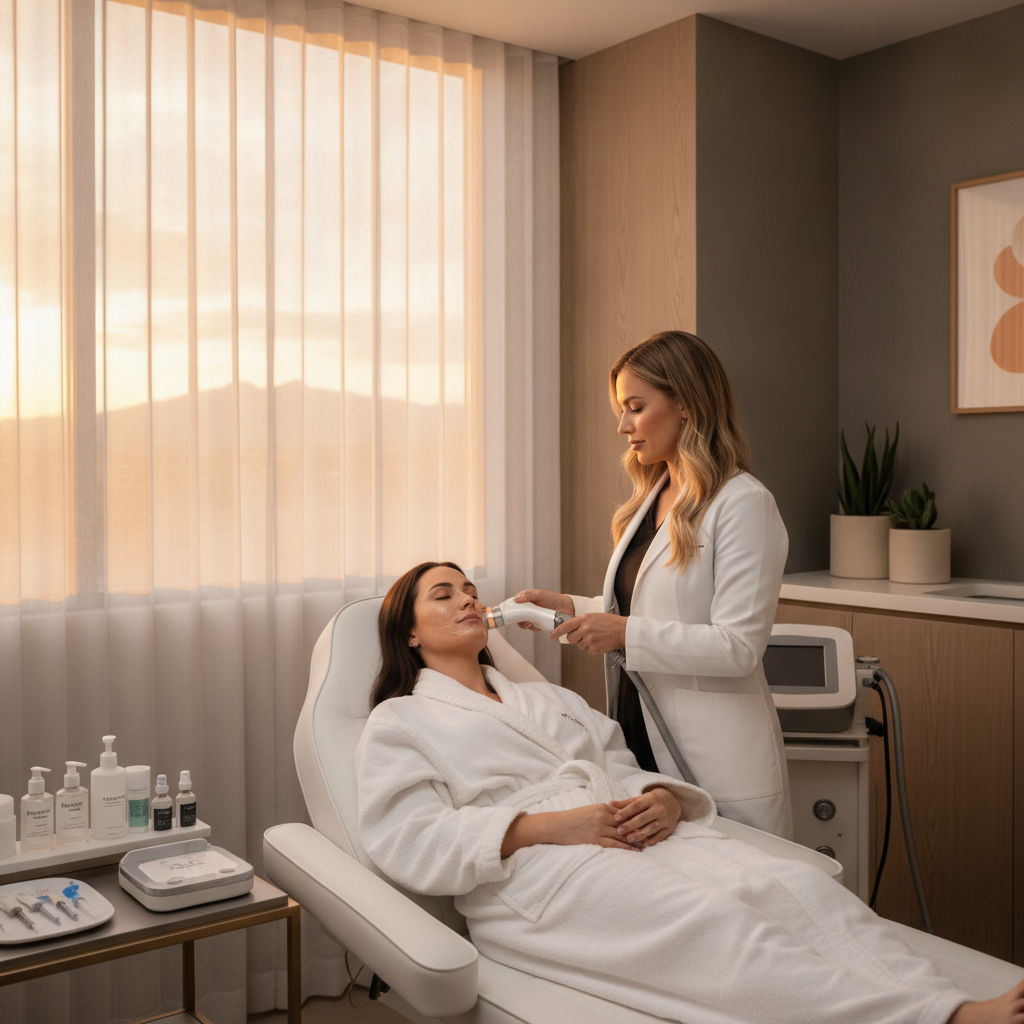
What Is Combination Treatment Stacking — and How Do Mesa Medspa Clients Get Better Results by Pairing Treatments Together?
If you’ve ever looked at someone’s before-and-after results and thought, “What did they actually do?” — the answer is often not just one treatment. Most of the best outcomes you see from clients in Mesa and across the East Valley come from a thoughtful combination of services working together. Treatment stacking, or layering complementary procedures into a personalized plan, is how experienced providers help clients address multiple concerns at once and build on results over time rather than hoping a single session does everything.
The concept isn’t complicated, but it does require some expertise. The goal is to match the right treatments to your specific skin concerns, body goals, and timeline — not to book every service on the menu at once. Here’s a practical guide to understanding how combination treatment planning actually works, and why it’s worth discussing with your provider before you start anything.
Why One Treatment Rarely Does Everything
Most aesthetic concerns involve more than one underlying issue. Take skin texture, for example. Rough, uneven skin might involve sun damage, enlarged pores, loss of collagen, and some pigmentation — all at the same time. A single laser session can help with pigmentation. A single HydraFacial can help with congestion. But if you’re dealing with several of those concerns together, a provider who builds a layered approach — perhaps starting with a HydraFacial to clear and prep the skin, followed by RF microneedling to rebuild collagen, and then a maintenance IPL treatment for pigmentation — is going to get you closer to where you want to be than any single modality alone.
The same principle applies to facial rejuvenation. Neurotoxins like Botox or Dysport address dynamic movement lines. Dermal fillers restore volume and structure. But neither one addresses skin surface quality — that’s where resurfacing and energy treatments come in. A well-rounded plan accounts for all three layers: movement, volume, and texture.
Common Treatment Combinations That Work Well Together
Neurotoxins + Dermal Fillers
This is probably the most well-known pairing, and for good reason. Botox, Dysport, Xeomin, and Jeuveau relax the muscles responsible for expression lines — crow’s feet, forehead creases, frown lines between the brows. Fillers like Radiesse or Sculptra address volume loss that neurotoxins simply can’t fix — hollowing under the eyes, flattening in the cheeks, softening of the jawline. Used together by a skilled injector, the combination produces a refreshed, natural appearance that neither product achieves alone. Clients in Gilbert, Chandler, and across the East Valley frequently combine these at the same appointment once they’ve had a thorough consultation.
RF Microneedling + HydraFacial
RF microneedling is excellent for collagen stimulation, skin tightening, and improving acne scarring and fine lines — but it does create temporary redness and sensitivity. Pairing it with a HydraFacial at a separate appointment (either as a prep treatment before or a recovery-support treatment after the appropriate healing window) helps maximize the skin’s response. Your provider should advise on the right sequencing, but this combination is especially popular among clients in Tempe and Scottsdale who are dealing with both surface-level dullness and deeper textural concerns.
Laser Skin Resurfacing + Injectables
Laser treatments like CoolPeel improve sun damage, fine lines, and skin texture at the surface. Injectables work beneath the surface on structure and movement. These two categories treat entirely different layers of the skin, which means they complement each other without competing. The typical approach is to complete your injectable appointments first, then schedule resurfacing once swelling has resolved — your provider can map out the right timing. For clients dealing with both the effects of Arizona sun exposure and early volume loss (very common in your 30s and 40s), combining these two categories over the course of a few months can produce a noticeably more comprehensive improvement.
Body Contouring + Skin Tightening
NuEra RF body contouring targets stubborn fat and cellulite, but it also delivers skin tightening benefits through radiofrequency energy — making it a natural pairing for clients who want to address both concerns in the same area. This is particularly relevant in the East Valley, where the desert climate means less clothing coverage for most of the year. Many clients in Queen Creek and Mesa begin a body contouring series in fall or early winter to see results heading into spring. Sessions are typically spaced one to two weeks apart, and most clients do a series of four to six treatments for best results.
The Gap Most Medspa Websites Miss: Sequencing and Timing
Here’s something that’s genuinely underexplained across most medspa websites — even those from well-established clinics in the East Valley: the order in which you receive treatments matters just as much as which treatments you choose.
Some treatments need to be done before others. Some need to be spaced weeks apart. And some combinations that might sound logical can actually interfere with each other if the timing is off. A few practical guidelines:
- Injectables first, lasers after: If you’re getting both neurotoxins and laser resurfacing in the same general period, most providers recommend completing injectables first and waiting until any swelling is fully resolved before doing laser work over the same area.
- Prep the skin before energy treatments: Doing a HydraFacial or medical-grade facial to clear congestion and improve skin health before RF microneedling or CoolPeel can improve how your skin responds to the treatment.
- Don’t stack aggressive treatments back to back: Two high-intensity treatments in the same week can overwhelm the skin’s recovery process. Spacing treatments appropriately isn’t a limitation — it’s what protects your results.
- Maintenance matters: Many combination plans include a “foundation” phase of more intensive treatments followed by a lighter maintenance schedule. Understanding both phases helps you plan realistically for cost and time.
This is exactly why a thorough consultation with an experienced provider isn’t just a formality — it’s where your actual plan gets built. At Az Laser Studio & Medspa, our medical team reviews your skin, your goals, and your timeline before recommending anything. That context is what makes the difference between a stacked plan that works and a series of appointments that don’t build on each other.
How to Talk to Your Provider About Stacking
You don’t need to walk in knowing exactly what you want. What helps is being clear about your goals — what bothers you most, what you’ve noticed changing, and what kind of commitment you’re realistically able to make in terms of time and budget. From there, a qualified provider can suggest a phased plan that starts with your highest-priority concern and adds complementary treatments as your skin responds.
Questions worth asking at your consultation:
- Which of my concerns would respond best to a single treatment, and which ones need a combination approach?
- What’s the right order to do these treatments in, and how far apart should they be scheduled?
- Are there any combinations I should avoid, or treatments that might interfere with each other?
- What does a realistic maintenance plan look like after the initial series?
Financing options like Cherry are available for clients who want to build a more comprehensive plan without paying everything upfront — something that makes multi-treatment plans much more accessible for most budgets in Mesa and the surrounding area.
Frequently Asked Questions
Can I get Botox and a laser treatment on the same day in Mesa?
It depends on the specific treatments and the area being addressed. Some same-day combinations are fine; others require spacing to avoid interfering with results or increasing irritation. Your provider will advise on the safest schedule based on your individual plan.
How many treatments do I need before I see a real difference?
That varies by treatment type and your starting point. Some clients notice significant improvement after a single session; others see the most meaningful change after a series of three to six appointments. A consultation will give you a realistic timeline based on your specific concerns.
Is it more expensive to do combination treatments?
It can be, but many clients find that a thoughtful combination plan actually stretches their investment further than repeating one treatment over and over without addressing the underlying causes. Financing options can also help spread costs over time.
Do medspa combination plans work differently for men than for women?
The treatments themselves work the same way biologically, but the goals and aesthetic priorities often differ. Men in Mesa and Chandler frequently focus on jawline definition, reducing sweat, and improving skin texture without looking obviously treated — and combination plans for male clients are typically built around those preferences.
How do I know if a medspa in the East Valley is qualified to build a combination treatment plan for me?
Look for a clinic with licensed and credentialed providers (RNs, NPs, or physicians), medical director oversight, and a consultation process that actually involves reviewing your skin and goals before recommending anything. A provider who recommends the same combination to everyone regardless of their concerns is a red flag.
Ready to Build a Plan That Actually Works?
If you’ve been doing one treatment at a time and feeling like you’re not quite getting where you want to be, it may be worth having a real conversation about what a layered approach could do for your goals. Az Laser Studio & Medspa serves clients throughout Mesa, Chandler, Gilbert, Queen Creek, Tempe, and Scottsdale with a consultation-first approach — no pressure, no cookie-cutter packages. Our team takes the time to understand what you want and builds a plan around your skin, your timeline, and your budget.
Request your free consultation today and find out what a personalized treatment plan could look like for you.