
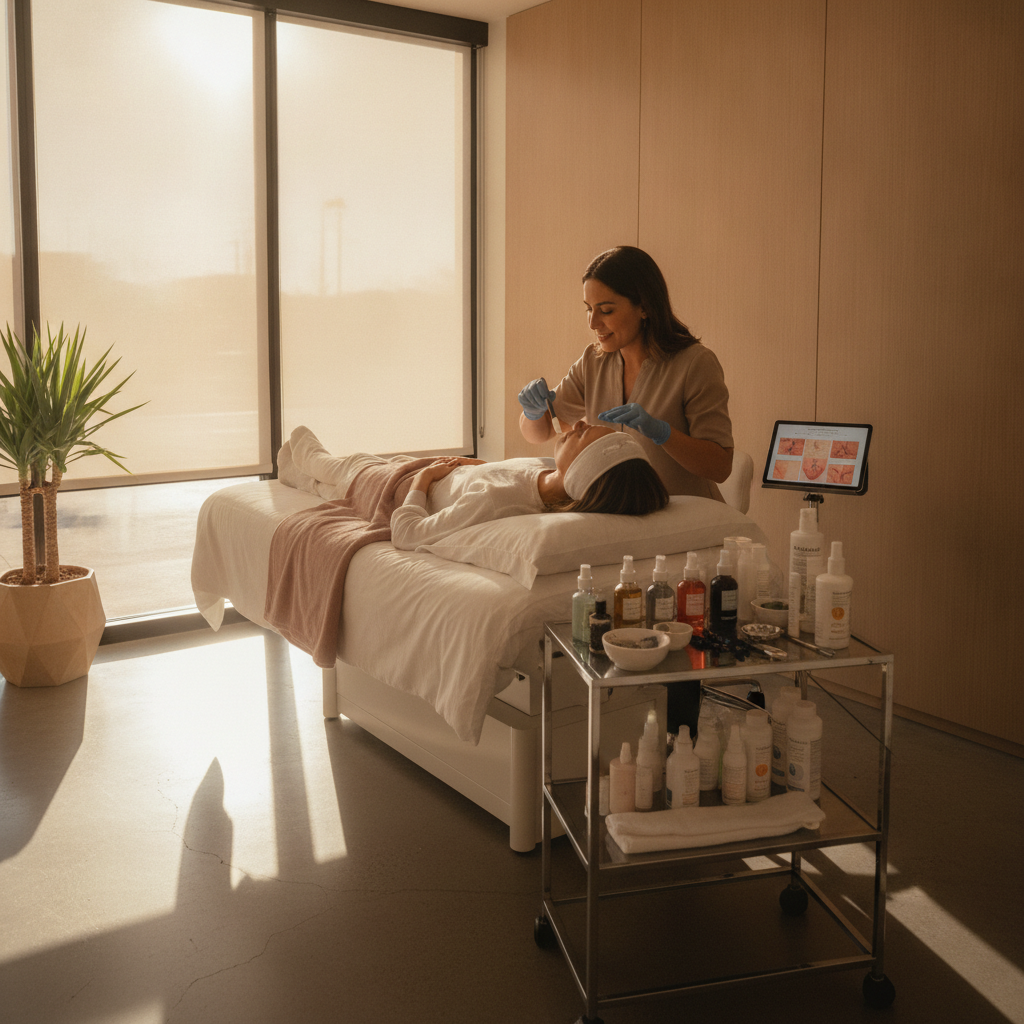
What Is a Chemical Peel at a Medspa — and How Do Adults in Mesa and Tempe Choose the Right Peel Strength for Their Skin?
A chemical peel at a medspa is not the same thing as the peel pads in your bathroom cabinet — and that distinction matters a lot if you’re trying to actually address sun damage, uneven skin tone, rough texture, or acne scarring. At a physician-supervised medspa in Mesa, a medical-grade chemical peel uses carefully formulated acids applied at clinical concentrations that go deeper, work faster, and produce more noticeable results than anything available over the counter. The right peel for your skin depends on your specific concerns, your skin type, and how much downtime you’re comfortable with — and that’s exactly why a personalized consultation is the starting point, not an upsell.
If you’ve searched for information on chemical peels in the East Valley and found mostly vague lists of ingredients with no real guidance on what to expect, you’re not alone. This is one of the most searched-for skin topics in the area — and one of the most shallowly covered by local medspa websites. This guide is designed to actually answer the questions you’re bringing to the search bar.
What Makes a Medical-Grade Chemical Peel Different From a Spa Peel?
Esthetician-grade peels available at day spas typically use low-concentration acids — usually well below the thresholds that produce significant skin turnover. They feel refreshing and can offer a mild brightening effect, but they don’t penetrate deeply enough to address moderate sun damage, deeper pigmentation, fine lines, or textural irregularities from acne scars.
Medical-grade peels, applied under licensed provider supervision, use higher concentrations of acids like glycolic, salicylic, lactic, trichloroacetic (TCA), or Jessner’s solution. These formulations are prescription-strength or clinically controlled, which means they require both professional application and proper pre-treatment skin preparation to get the best results safely. At Az Laser Studio & Medspa, chemical peels are part of a broader medical-grade facial and peel menu overseen by a licensed medical team — not administered without assessment.
Understanding Peel Depth: Superficial, Medium, and Deep
Choosing the right peel starts with understanding how deeply it penetrates the skin. Peels are generally categorized into three depths, and your provider will help you identify which level is appropriate for your skin concerns and lifestyle.
Superficial Peels
Superficial peels — often using glycolic acid, lactic acid, or low-concentration salicylic acid — target only the outermost layer of skin. They’re ideal for first-time peel clients, people with mild uneven texture, minor dullness, or early sun damage. Downtime is minimal: some light flaking or tightness for a day or two, but most people return to normal activity the same day. These peels work well as a series — often three to six treatments spaced a few weeks apart — to progressively improve skin tone and smoothness.
Medium-Depth Peels
Medium-depth peels use stronger acids — typically TCA at moderate concentrations or a Jessner’s combination formula — to penetrate through the epidermis and into the upper dermis. These are significantly more effective for moderate sun damage, brown spots, mild to moderate acne scarring, and visible fine lines. Expect three to seven days of peeling, redness, and social downtime. The payoff is more pronounced skin renewal — but preparation matters. Your provider will likely recommend a pre-peel skincare regimen in the weeks prior to optimize your results and reduce risk of post-inflammatory pigmentation, particularly for darker skin tones.
Deep Peels
Deep chemical peels (such as high-concentration phenol peels) are performed less frequently in a medspa setting and are more appropriate for significant skin damage, deep wrinkles, or severe scarring. They require more involved aftercare and longer downtime. If your concerns reach this level, your provider will discuss whether a peel or a laser resurfacing approach — like a CoolPeel or more aggressive laser treatment — is the better fit for your goals.
What Skin Concerns Do Chemical Peels Actually Address in the East Valley?
Living in the Mesa area means you’re exposed to intense UV radiation nearly year-round. Even with diligent sun protection, the Greater Phoenix metro’s climate accelerates sun damage, hyperpigmentation, and premature skin aging in ways that clients from cooler climates don’t experience as early. Chemical peels are one of the most direct ways to address the cumulative effects of that exposure — and they pair well with other treatments like RF microneedling or IPL facials for more comprehensive skin rejuvenation.
Common concerns that chemical peels address well include:
- Sun damage and brown spots — Accelerated melanin production from Arizona’s UV exposure responds well to medium-depth peels, particularly TCA-based formulations.
- Uneven skin tone and dullness — Superficial peels with glycolic or lactic acid promote faster cell turnover, revealing fresher, more even skin underneath.
- Acne and post-acne marks — Salicylic acid peels are oil-soluble, making them particularly effective for acne-prone skin, clogged pores, and the residual pigmentation that lingers after breakouts clear.
- Fine lines and rough texture — Peels that stimulate collagen remodeling in the upper dermis can soften the appearance of fine lines and improve overall skin smoothness.
- Mild acne scarring — A series of medium-depth peels can progressively reduce the depth and visibility of superficial acne scars, though deeper scars often benefit more from RF microneedling.
The Gap Most Local Medspa Websites Miss: Peel Timing Around Arizona’s Climate
One thing you’ll notice if you search for chemical peel information from local competitors is that almost none of them discuss how Arizona’s climate should influence when you schedule a peel. This is a genuinely important consideration — and it’s worth addressing directly.
Fresh post-peel skin is more photosensitive than normal skin, sometimes significantly so. In a city like Mesa or Tempe where temperatures exceed 110°F in summer and outdoor exposure is nearly unavoidable, scheduling a medium or deep peel in June or July creates real risk of uneven healing, hyperpigmentation, or sun damage to freshly resurfaced skin. Fall and winter are the most popular — and most practical — windows for chemical peels and laser resurfacing in the East Valley, which is part of why medspa appointment books tend to fill up quickly from October through February.
That said, superficial peels with appropriate sun protection can be performed year-round for most clients. Your provider will help you time your treatment series around your lifestyle, your outdoor activity level, and the depth of treatment you’re pursuing. If you’re in Chandler or Gilbert and spend most of your time indoors, the calculus may be different than it is for someone who works outdoors near the Superstition Freeway corridor.
What to Expect at a Chemical Peel Consultation in Mesa
A reputable medspa doesn’t simply ask which peel you want and apply it. A proper consultation reviews your full skin history — past reactions, current skincare products (retinoids and certain acids need to be paused before some peels), medications, and your specific skin concerns. Your provider will assess your Fitzpatrick skin type, which is a clinical classification system that helps guide safe acid concentrations for your complexion, particularly if you have a medium or deeper skin tone where post-inflammatory hyperpigmentation is a greater risk.
You’ll also discuss realistic outcomes. A single peel can deliver visible improvement, but most clients who want meaningful, lasting results commit to a series. Your provider will outline a plan — not a pressure pitch — based on what your skin actually needs. The team at Az Laser Studio & Medspa takes a consultation-first approach to every treatment, including peels, so you leave with a clear picture of what to expect before anything is applied to your skin.
How Chemical Peels Fit Into a Broader Skin Health Plan
Peels rarely exist in isolation for clients who are serious about their skin. Depending on your goals, your provider may recommend pairing a peel series with treatments like HydraFacial for hydration support, IPL for pigmentation correction, or RF microneedling for deeper collagen remodeling. The combination approach is increasingly popular with East Valley clients who want comprehensive skin improvement, not just a single-session result.
It’s also worth noting that chemical peels are one of the most affordable medical-grade skin treatments available — often less than other energy-based options — which makes them a natural starting point for clients exploring medspa services for the first time. Many practices in the Mesa area now offer financing through platforms like Cherry, which allows you to spread treatment costs across a series without paying for everything upfront.
Frequently Asked Questions About Chemical Peels in Mesa and Tempe
How many chemical peel sessions will I need to see results?
It depends on your starting point and goals. A single medium-depth peel can produce noticeable improvement, but for concerns like hyperpigmentation or acne scarring, most providers recommend a series of three to six treatments spaced three to four weeks apart. Your consultation will give you a more specific roadmap.
Is it safe to get a chemical peel if I have a darker skin tone?
Yes, with the right peel selection and provider. Deeper skin tones require careful acid selection and concentration to minimize the risk of post-inflammatory hyperpigmentation. A skilled provider will assess your Fitzpatrick skin type and choose a formulation that’s appropriate — this is one reason to seek a medically supervised medspa rather than a day spa for peels.
When is the best time of year to get a chemical peel in Mesa?
Fall through early spring — roughly October through March — is generally preferred for medium or deeper peels in the East Valley due to lower UV intensity and more manageable temperatures. Superficial peels can typically be done year-round with proper sun protection.
Can I combine a chemical peel with other treatments like Botox or filler?
Many clients do combine peels with injectables, though timing matters. Your provider will advise on sequencing — typically, peels are either done before injectables or at a separate appointment to avoid skin irritation at injection sites. This is part of what makes a personalized treatment plan valuable.
What’s the difference between a chemical peel and CoolPeel laser resurfacing?
Both address similar concerns — texture, tone, and surface renewal — but through different mechanisms. Chemical peels use acid chemistry to dissolve dead skin cells and stimulate turnover, while CoolPeel uses a CO2 laser to precisely ablate the skin’s surface and trigger collagen remodeling. CoolPeel tends to offer more controlled, targeted results for deeper textural issues and sun damage, while peels offer more flexibility in terms of downtime and acid type. Your provider can help you decide which is better suited to your specific goals.
Ready to Find the Right Peel for Your Skin?
If you’re in Mesa, Tempe, Chandler, Gilbert, or anywhere in the East Valley and you’ve been curious about whether a chemical peel could address your skin concerns, the best next step is a conversation — not a guess. At Az Laser Studio & Medspa, consultations are built around your skin, not a menu. Contact us today to schedule your free consultation and find out which peel depth, acid formulation, and treatment plan makes the most sense for where your skin is right now — and where you want it to be.