
What Is PRP/PRF Therapy — and Is It Right for Skin Rejuvenation and Hair Restoration for Men and Women in Mesa and Tempe?
If you’ve been researching natural alternatives to fillers or synthetic treatments and keep seeing terms like PRP and PRF pop up, you’re not alone. These therapies have grown considerably in popularity across the East Valley — and for good reason. PRP (platelet-rich plasma) and PRF (platelet-rich fibrin) therapy both use growth factors drawn from your own blood to stimulate your body’s natural healing and regeneration processes. Whether the goal is smoother skin, reduced under-eye hollowing, or slowing hair thinning, these treatments offer a biologically driven approach that resonates with clients in Mesa and Tempe who want real results without reaching for increasingly synthetic solutions.
PRP vs. PRF: What’s Actually the Difference?
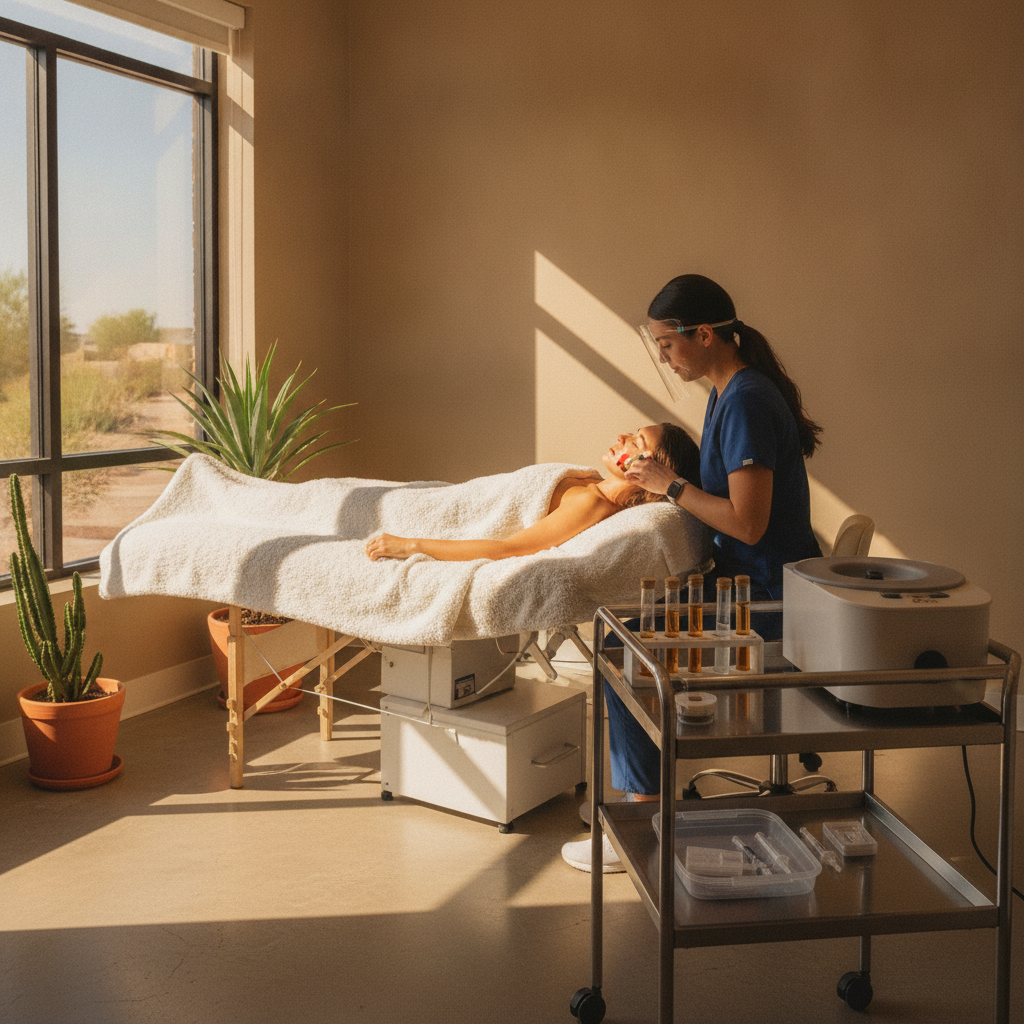
Both PRP and PRF start the same way: a small amount of blood is drawn from your arm — just like a routine lab draw — and then spun in a centrifuge to separate the components. What’s concentrated and used is where the two diverge.
PRP (Platelet-Rich Plasma) has been around longer and is processed at a higher spin speed, which separates the platelets quickly into a liquid plasma. It has a higher concentration of growth factors but releases them relatively quickly once injected.
PRF (Platelet-Rich Fibrin) is a newer evolution of the process. It’s spun more slowly, which preserves a fibrin matrix — essentially a scaffolding structure — along with white blood cells and stem cells that PRP processing removes. Because of this matrix, PRF releases growth factors more gradually over time, which many providers consider an advantage for longer-lasting tissue stimulation. PRF is also processed without anticoagulants, making it an even more natural preparation.
In practical terms: PRF is often considered the more advanced option, especially for skin rejuvenation and hair restoration. Your provider can help you understand which is more appropriate for your specific concerns during a consultation.
What Can PRP and PRF Actually Be Used For?
This is the area where a lot of competing medspa websites in the East Valley fall short — they mention PRP briefly but don’t explain the range of applications or set realistic expectations. Here’s a clearer picture of where these therapies are commonly used:
Skin Rejuvenation and Texture Improvement
PRP and PRF can be injected into areas of the face to encourage collagen production, improve overall skin tone, and soften fine lines. They’re particularly useful for clients who want improvement in skin quality without dramatically changing their facial structure. Many providers pair PRF with RF microneedling for enhanced results — the microneedling creates micro-channels that allow topically applied PRF to penetrate more deeply, and the combination can meaningfully address texture, tone, and mild laxity.
Under-Eye Rejuvenation
The under-eye area is one of the most requested applications in medspa settings, and it’s also one of the most delicate. PRF injected under the eyes can help with hollowing, fine lines, and the thin, crepey appearance that often develops with age or sun exposure. Because it uses your own biology rather than a filler, there’s no risk of the bluish discoloration (Tyndall effect) that can occasionally occur with hyaluronic acid fillers placed too superficially in that zone.
Hair Restoration for Thinning Hair
One of the most underexplored uses of PRP and PRF in local medspa marketing is hair restoration. Injected into the scalp in areas of thinning, these therapies deliver growth factors directly to hair follicles, which can help slow hair loss and support regrowth over a series of treatments. This option is particularly relevant for both men and women — diffuse thinning in women, early androgenic hair loss in men — and it pairs well with physician-supervised wellness programs for clients also exploring hormonal contributors to hair loss.
Results with scalp PRP or PRF typically require a series of three to four sessions spaced four to six weeks apart, followed by periodic maintenance. It’s not an overnight fix, but for clients who are good candidates and start treatment before significant follicle loss has occurred, the results are meaningful.
Who Is a Good Candidate — and Who Isn’t?
PRP and PRF are well-suited for adults who are generally healthy, not currently on blood thinners, and not dealing with active infections or certain blood disorders. Because these therapies rely on your own biology, results can vary depending on the health and concentration of your platelets — which is why a consultation with an experienced provider matters far more than any general estimate you’ll find online.
Clients in Chandler and Scottsdale with heavy sun damage history often ask whether PRP alone is enough for significant rejuvenation. The honest answer is that it depends. For mild concerns, it can be a standalone treatment. For more advanced sun damage, texture issues, or significant volume loss, it tends to work best as part of a broader treatment plan — potentially alongside laser resurfacing or dermal fillers — rather than as a replacement for them.
Candidates who are unlikely to benefit as much include those with platelet disorders, active autoimmune conditions, or who are on medications that affect platelet function. Your provider will review this during your intake process.
What to Expect During and After Treatment
The appointment itself is relatively straightforward. A small blood draw takes place first. While the centrifuge processes your sample — typically around 10 to 15 minutes — your provider prepares the treatment area. Topical numbing can be applied beforehand to minimize discomfort during injection. The injections themselves are quick, and most clients tolerate the process well.
Afterward, mild redness, swelling, or bruising at injection sites is normal and typically resolves within a day or two. Because it’s your own blood being returned to your body, allergic reactions are not a concern, and recovery is generally easier than with many other injectable treatments. There’s no filler to migrate, no neurotoxin to wait for — just your body’s own growth factors getting to work.
For skin applications, many clients notice an improvement in skin quality over four to eight weeks as collagen production ramps up. For hair restoration, noticeable changes in shedding or density often take two to three months to become apparent. Patience is part of the process, and an experienced provider will set realistic expectations upfront rather than overpromising.
Why the Desert Climate Makes This Worth Considering Year-Round
Living in the greater Mesa and Tempe area means year-round sun exposure — even in winter, UV index levels here are meaningful. That cumulative exposure accelerates collagen breakdown, contributes to fine lines, and stresses hair follicles in ways that aren’t as pronounced in cooler climates. PRP and PRF therapies are one of the few treatment categories that work with your body’s own biology to rebuild what environmental exposure takes away, and unlike laser treatments, there are no sun-sensitivity windows to plan around. That makes them an especially practical option for East Valley residents who want to stay consistent with their skin health without timing their treatments around the calendar.
If you’re also exploring physician-supervised weight loss programs or hormone therapy, it’s worth mentioning that hormonal shifts — including those related to perimenopause, menopause, or low testosterone — can accelerate hair thinning. Addressing both the hormonal and follicular sides of the equation often produces better outcomes than treating either in isolation.
Frequently Asked Questions About PRP and PRF in Mesa
How many PRP or PRF sessions will I need?
For skin rejuvenation, many clients see meaningful improvement after two to three sessions spaced four to six weeks apart. Hair restoration typically follows a similar initial series, with maintenance sessions every three to six months depending on response. Your provider will give you a personalized recommendation at your consultation.
Does PRP or PRF hurt?
Most clients describe mild discomfort during the injection phase. Topical numbing cream is typically applied beforehand to minimize this. The blood draw is the same as any standard lab draw — brief and tolerable for most people.
Can PRP or PRF be combined with other medspa treatments?
Yes — and it frequently is. PRF pairs especially well with RF microneedling for enhanced skin rejuvenation results. It can also be used alongside neurotoxin injections or dermal fillers in a comprehensive facial treatment plan. Your provider will help you figure out what combination makes sense for your goals and timeline.
Is PRF better than PRP for hair restoration?
PRF is generally considered the more advanced preparation because of its fibrin matrix and sustained growth factor release. That said, both have been used effectively for scalp treatment, and the best option for you depends on your individual situation and what your provider recommends after evaluating your hair loss pattern and overall health.
How do I know if a medspa in Mesa is qualified to perform PRP or PRF?
Look for providers with clinical credentials — RNs, NPs, or physicians — and a medspa that operates under medical director oversight. PRP and PRF involve blood draws and injections, which are medical procedures. A reputable provider will be transparent about who is performing your treatment and what their training background includes. You can learn more about the team at Az Laser Studio & Medspa on the about us page.
Ready to Find Out If PRP or PRF Is Right for You?
PRP and PRF therapy aren’t right for everyone, and the honest answer to whether they’ll work for your specific concerns is one that requires an actual conversation with a qualified provider — not a quiz or an online estimate. At Az Laser Studio & Medspa in Mesa, consultations are the starting point for every treatment plan. You’ll get a clear picture of what these therapies involve, whether you’re a good candidate, and how they might fit alongside any other treatments you’re considering.
If you’re in Mesa, Tempe, Chandler, Scottsdale, or anywhere across the East Valley and want to explore natural-approach treatments for skin rejuvenation or hair restoration, reach out and schedule your free consultation at azlaserstudiomedspa.com/contact-us or call us at (480) 450-4809. We’ll take it from there.