
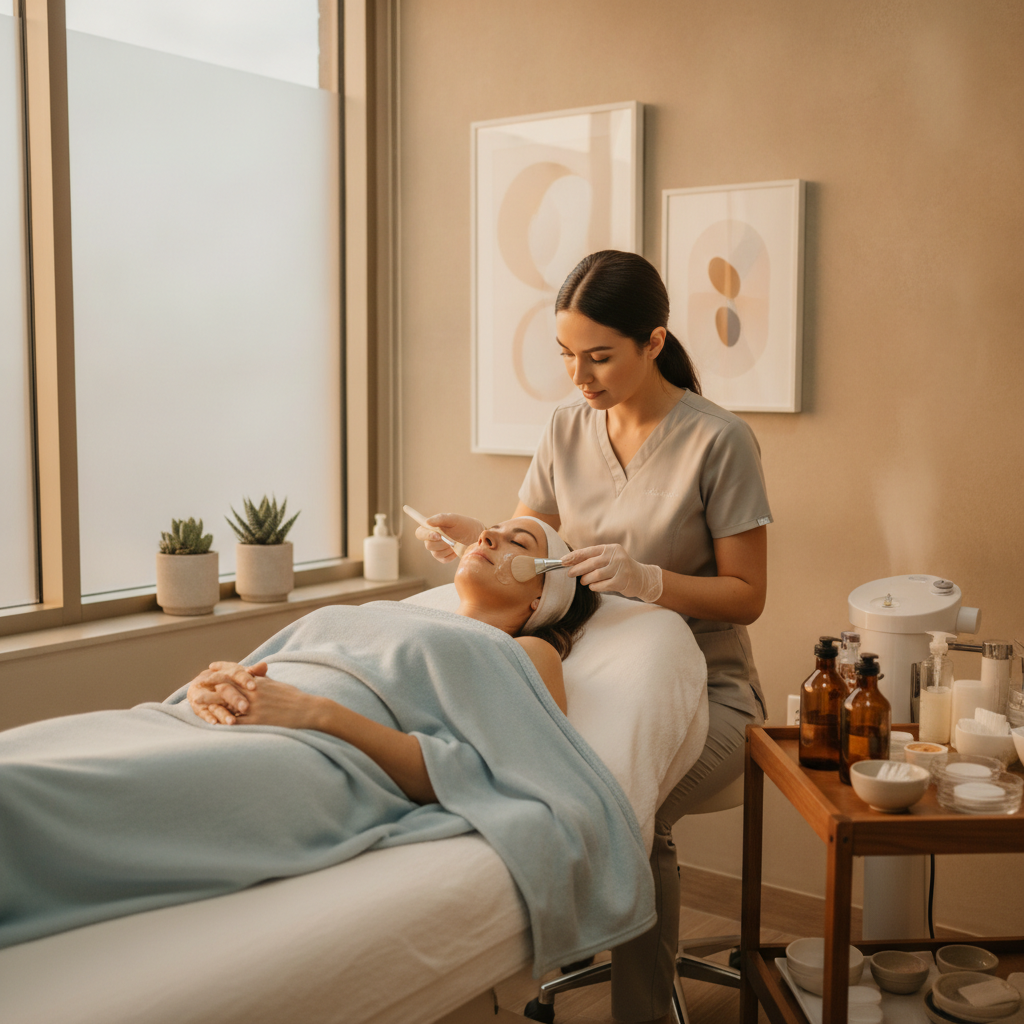
What Is a Chemical Peel — and Which Type Is Right for Your Skin Goals in Mesa and Chandler?
A chemical peel is a skin treatment that uses a carefully selected acid solution to remove damaged outer layers of skin, encouraging your skin to shed and regenerate. The result — depending on the depth of the peel — is fresher texture, more even tone, and reduced appearance of sun damage, acne scarring, fine lines, or congestion. If you live in Mesa or Chandler and you’ve been told to “try a peel” without much explanation of what that actually means, this article is for you. Chemical peels range from lunchtime-light to clinically significant, and choosing the right one depends on your skin type, your goals, and your willingness to manage some downtime.
Why Chemical Peels Are a Bigger Deal Than Most People Realize
The word “peel” has a way of making this treatment sound simple — and in some forms it is. But at a medical spa, chemical peels are clinical treatments, not spa luxuries. Medical-grade peels use higher-concentration acids than anything available over the counter, and they’re applied by trained providers who understand how your skin will respond based on its type, tone, and history.
That distinction matters a lot in the East Valley. Arizona’s intense sun exposure means many local residents are dealing with significant sun damage, post-inflammatory hyperpigmentation, and dehydrated skin that has been stressed by years of UV exposure and dry desert air. A peel formulated and applied correctly can make a real difference for these concerns. One applied incorrectly — or one purchased as a DIY kit online — can cause uneven results, irritation, or, in the case of deeper peels on untested skin, more serious complications.
The Three Levels of Chemical Peels — and What Each One Does
Understanding peel depth is the starting point for any conversation with your provider. Here’s how they break down in plain terms:
Superficial Peels
These use mild acids — typically alpha-hydroxy acids (AHAs) like glycolic or lactic acid, or low-concentration salicylic acid — to gently exfoliate the outermost layer of skin. You may experience light flaking for a day or two, but most people can return to normal activities immediately. Superficial peels are great for general skin brightening, minor congestion, and maintaining results between deeper treatments. They’re a good starting point if you’ve never had a peel before.
Medium-Depth Peels
These penetrate more deeply and are more effective for addressing moderate sun damage, uneven pigmentation, acne scarring, and early signs of aging. Trichloroacetic acid (TCA) is commonly used at this level. Expect some redness, tightness, and visible peeling over several days — typically three to seven — before the new skin emerges. The results are noticeably more significant than a superficial peel, and many clients find medium-depth peels to be the sweet spot between visible impact and manageable downtime.
Deep Peels
Deep peels, such as those using phenol, reach the deeper layers of the dermis and produce dramatic results for severe sun damage and deep wrinkles. These require more significant recovery time and medical oversight, and they’re not appropriate for all skin tones. At a reputable medspa, your provider will have an honest conversation with you about whether a deep peel is suitable for your skin — and may suggest alternative treatments like CoolPeel laser resurfacing if your goals can be met with less risk.
What Chemical Peels Actually Treat — and What They Don’t
This is one of the areas where a lot of online content falls short: it lists peel benefits without being honest about limitations. Here’s a realistic picture:
- Sun damage and hyperpigmentation: Chemical peels are genuinely effective for these concerns, which are extremely common among Mesa and Chandler residents who spend significant time outdoors.
- Acne and post-acne marks: Salicylic acid peels work well for active acne and oily skin. Medium-depth peels can improve the appearance of post-acne dark spots and shallow scarring.
- Uneven texture: Peels smooth out rough, dull, or bumpy skin by removing the buildup of dead cells that creates that lackluster look.
- Fine lines: Superficial peels won’t do much for established fine lines, but medium-depth peels — used as part of a consistent treatment plan — can soften their appearance over time.
- Deep wrinkles and volume loss: Peels don’t address structural concerns. If volume loss or deep folds are your primary concern, a conversation about dermal fillers or neurotoxins may be more relevant to your goals.
- Deep acne scars (icepick or boxcar): For more textural scarring, RF microneedling or laser resurfacing may produce better results than peels alone — and combining modalities is often where the real improvement happens.
A Genuinely Underserved Topic: Chemical Peels and Darker Skin Tones in the East Valley
This is a content gap that almost no local competitor addresses directly — and it’s important for a diverse community like Mesa and Chandler, where many residents have medium to deeper skin tones (Fitzpatrick types III through VI).
Certain chemical peels carry a risk of post-inflammatory hyperpigmentation (PIH) in darker skin tones if they’re too aggressive or applied without proper pre-treatment. This doesn’t mean peels are off the table — it means the right peel, the right formulation, and a provider who understands how your specific skin will respond are essential.
At a qualified medspa, your provider should ask about your skin’s history with pigmentation changes, sun sensitivity, and any previous reactions before recommending a peel type or strength. Gentler acids like mandelic acid and low-concentration lactic acid are often preferred starting points for clients with deeper skin tones, and a conservative approach — building up over multiple sessions — typically produces better results than jumping to a more aggressive treatment in one session.
If a provider doesn’t bring up your skin tone as part of the peel selection conversation, that’s worth paying attention to.
How Many Peels Will You Need — and How Often?
This depends entirely on your goals and which peel type you’re doing. Superficial peels are often done in a series — typically four to six sessions spaced two to four weeks apart — to build cumulative improvement. A single medium-depth peel may deliver meaningful results on its own, though a series of two to three spaced further apart is common for more significant concerns.
For residents in Chandler, Gilbert, and the broader East Valley who spend a lot of time outdoors year-round, sun avoidance before and after a peel is non-negotiable. Your provider will advise you on exactly what to avoid and for how long — but plan for consistent SPF use and limited direct sun exposure in the days surrounding your treatment.
Timing your peel series for fall and winter — when Arizona’s sun intensity is slightly lower and you’re more likely to stay covered — makes practical sense for many clients.
What to Expect at Your Peel Appointment
A chemical peel appointment typically takes 30 to 60 minutes depending on the type and depth. Your skin will be cleansed thoroughly before the solution is applied. You may feel warmth, tingling, or mild stinging during application — this is normal and usually brief. Superficial peels are often neutralized with water after a set period. Medium peels may self-neutralize and involve more visible skin reaction in the hours afterward.
Your provider will give you specific aftercare instructions. Following them carefully is what separates a great result from a mediocre one. This includes avoiding picking or pulling at peeling skin, staying out of the sun, using only the recommended moisturizer and SPF, and skipping active skincare ingredients like retinol or exfoliating acids until your skin has fully healed.
Frequently Asked Questions About Chemical Peels in Mesa and the East Valley
Is a chemical peel the same as a facial?
No. A medical-grade facial cleanses, hydrates, and addresses surface congestion. A chemical peel uses acid to actively resurface the skin at a deeper level. Peels and facials can complement each other as part of a broader skincare plan, but they’re distinct treatments with different purposes.
Can I get a chemical peel if I have sensitive or reactive skin?
Yes, but the peel type matters enormously. Clients with sensitive skin often do well with lactic acid or enzyme-based peels, which are gentler than glycolic or TCA options. Your provider will assess your skin’s tolerance during a consultation before recommending anything.
How much do medical-grade chemical peels cost in the Mesa area?
Cost varies based on peel depth, the products used, and whether you’re purchasing a single treatment or a series. We recommend scheduling a consultation to discuss your goals and get accurate pricing for what your skin actually needs — rather than a one-size-fits-all package.
How soon will I see results after a peel?
Superficial peels often show subtle brightening within a few days as light flaking resolves. Medium-depth peels typically show more significant improvement once peeling is complete — usually five to seven days post-treatment — and results continue to improve over the following weeks as collagen production responds.
Do chemical peels work for melasma?
Peels can help reduce the appearance of melasma over a series of treatments, but melasma is notoriously complex and highly sun-dependent. It often requires a combination approach including topical brighteners, sun avoidance, and potentially IPL or other energy treatments. A provider experienced with melasma will be honest about what peels can and can’t accomplish on their own.
Ready to Find the Right Peel for Your Skin?
If you’ve been curious about chemical peels but weren’t sure where to start — or you’ve had a peel before and want to understand your options more clearly — the team at Az Laser Studio & Medspa is here to help. We take a consultation-first approach, which means we look at your skin, ask about your history, and recommend treatments that make sense for your actual goals. No pressure, no one-size-fits-all protocols.
Serving Mesa, Chandler, Scottsdale, Gilbert, and the greater East Valley, we offer medical-grade facials and chemical peels alongside a full range of laser, injectable, and body treatments — so whatever your skin needs, we can build a plan around it. Request your free consultation today and let’s talk about what your skin can do.