
What Is Dysport — and How Is It Different From Botox for Residents in Tempe and Mesa?
Botox gets all the name recognition, but Dysport — the other FDA-approved neurotoxin that many experienced injectors actually reach for first — rarely gets a fair explanation. If you’re exploring wrinkle-relaxing treatments in Tempe or Mesa and you’ve seen both names on a medspa’s menu without a clear sense of the difference, you’re not alone. The short answer: both are injectable neurotoxins that relax the muscles responsible for expression lines, but they’re not identical products, and the right choice depends on your anatomy, the area being treated, and your provider’s clinical experience. Here’s what it actually helps to know before you book.
What Dysport Is and How It Works
Dysport (abobotulinumtoxinA) is an injectable neurotoxin derived from the same botulinum toxin type A family as Botox. Like Botox, it works by temporarily relaxing the targeted muscle so it can’t contract as forcefully — which softens the appearance of dynamic wrinkles, the lines that form from repeated facial expressions like squinting, raising your eyebrows, or frowning. It has been FDA-approved for cosmetic use in the United States since 2009 and has a long safety record in both medical and aesthetic practice worldwide.
What sets Dysport apart is its slightly smaller protein molecule and lower dilution point, which gives it a tendency to spread more readily from the injection site. That’s not a flaw — in the hands of a skilled injector, it’s actually a clinical advantage for treating larger, flatter muscle groups like the forehead. The broader diffusion can mean fewer injection points and a smoother, more even result across wide areas of movement.
Dysport vs. Botox: The Practical Differences That Actually Matter
A few distinctions are worth understanding before you walk into any medspa consultation in the East Valley:
- Unit conversion is not 1:1. Dysport is typically dosed at a higher unit number than Botox to achieve a comparable result. This is normal and expected — it doesn’t mean you’re getting more product or spending more money. A qualified provider will explain the conversion and quote you accordingly.
- Onset may be slightly faster. Many patients notice Dysport beginning to take effect within two to three days, compared to Botox’s typical three to five days. Results for both tend to settle fully around the two-week mark.
- Spread and diffusion differ. Dysport’s tendency to diffuse over a slightly wider area makes it a preferred choice for the glabella (the area between the brows) and forehead, where even muscle relaxation across a broad surface matters. For more precise, targeted areas — like crow’s feet or lip lines — some injectors prefer the tighter spread of Botox or Xeomin.
- Duration is comparable. Both products typically last three to four months for most patients, though individual results vary based on metabolism, muscle mass, and treatment frequency.
- Neither is inherently better than the other. The right product depends on the area being treated, how your specific muscles respond, and your provider’s clinical judgment — not brand loyalty.
What Dysport Is Commonly Used to Treat
Dysport is FDA-approved for glabellar lines — the vertical creases between your brows that can make you look perpetually frustrated or tired even when you’re not. It’s also widely used off-label (a common and accepted practice in aesthetics under physician oversight) for:
- Horizontal forehead lines
- Crow’s feet at the outer corners of the eyes
- A brow lift effect when placed strategically
- Bunny lines across the nose
- Chin dimpling and neck bands in appropriate candidates
At Az Laser Studio & Medspa, the conversation about which neurotoxin to use happens during your consultation — not before. Your provider will assess your facial anatomy, talk through your goals, and recommend whether Dysport, Botox, Xeomin, or Jeuveau makes the most sense for your specific situation. You can learn more about all four options on our neurotoxin injections page.
The Gap Most Local Medspa Websites Don’t Fill: How to Choose Between Neurotoxins
If you’ve browsed competitor medspa websites across Mesa, Tempe, Gilbert, or Chandler, you’ve probably noticed that most of them list Botox and Dysport side by side on a menu — sometimes with a brief one-line description — without explaining what the clinical difference actually means for you. That’s a gap worth addressing, because it leaves patients guessing and can lead to the wrong expectations going into a treatment.
The honest answer is that most patients who are good candidates for Botox are also good candidates for Dysport. The more relevant question is: which product does your provider have the most experience using in your target area, and what does your anatomy suggest? An injector who has administered thousands of units of Dysport specifically for forehead relaxation will achieve a better result than one who reaches for it because it was on sale. When you’re consulting with a provider in Scottsdale, Mesa, or anywhere in the East Valley, don’t be shy about asking which neurotoxin they recommend and why — and what their unit conversion and dosing rationale looks like for your anatomy.
What a Dysport Treatment Actually Looks and Feels Like
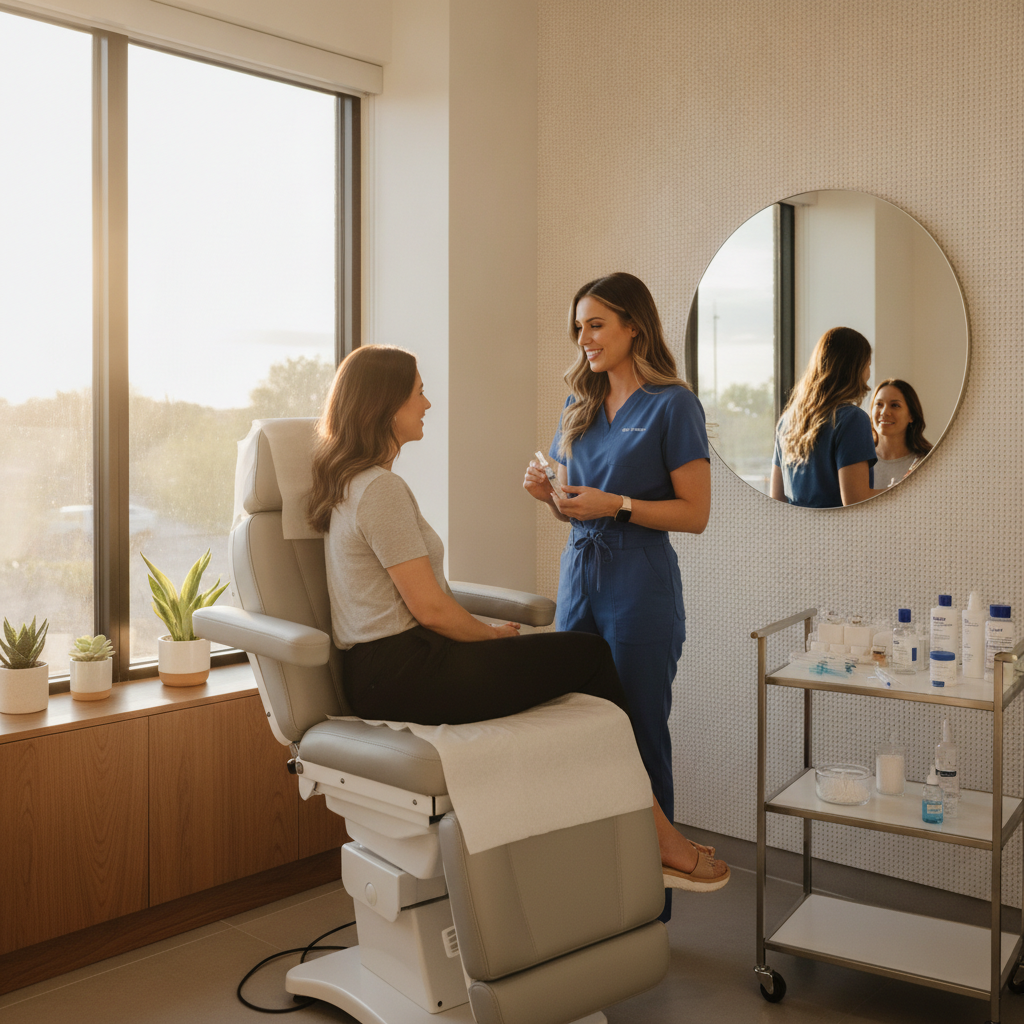
The appointment itself is quick. Most neurotoxin treatments take fifteen to twenty minutes from start to finish once your consultation is complete. Your provider will cleanse the treatment area, may apply a topical numbing cream if you prefer, and then place a small number of precise injections using a very fine needle. Most patients describe the sensation as a minor pinch — nothing that requires downtime or significant discomfort management.
Afterward, you’ll be asked to avoid rubbing or pressing the treated area for several hours, skip intense exercise for the rest of the day, and stay upright for a few hours post-treatment. You can return to normal activities almost immediately. Any minor redness or small bumps at the injection sites typically resolve within an hour or two.
Results begin to appear within two to three days and settle fully by the two-week mark. If something feels uneven or asymmetric at that point, a follow-up adjustment is a normal part of the process at any reputable practice.
Provider Credentials: What to Verify Before Booking Anywhere in the East Valley
Arizona has seen significant growth in medspa regulation conversations over the past few years, and for good reason. Neurotoxin injections should be administered by or under the direct supervision of a licensed medical provider — a registered nurse, nurse practitioner, or physician assistant with appropriate aesthetic training and a supervising medical director. This isn’t a detail to gloss over, especially as the East Valley continues to see new injectable studios open alongside established practices.
Before you book anywhere in Mesa, Tempe, Chandler, or beyond, it’s worth asking:
- Who will be performing my injections, and what are their credentials?
- Is there a medical director on staff and involved in treatment oversight?
- What products do you use, and are they sourced directly from the manufacturer?
- What does your follow-up process look like if I have questions after my appointment?
You can read more about the Az Laser Studio & Medspa medical team and approach on our about us page.
Frequently Asked Questions About Dysport in Mesa and Tempe
Is Dysport safe for first-time neurotoxin patients?
Yes, Dysport has a well-established safety profile and is a reasonable option for first-time patients. Your provider will typically start conservatively and adjust at a follow-up if needed — a standard approach for anyone new to injectables.
How many units of Dysport will I need?
Dosing varies based on the area treated, your muscle strength, and your desired result. Because Dysport units are not equivalent to Botox units, your provider will give you a unit estimate specific to the product being used. A good consultation will walk you through this before any treatment begins.
Does Dysport look different from Botox on the face?
When properly dosed and placed by an experienced injector, the visible result should look natural and similar regardless of which neurotoxin was used. The goal for both is movement reduction without a frozen or over-treated appearance.
Can I switch between Dysport and Botox at different appointments?
Yes, many patients alternate or switch products over time based on their response, their provider’s recommendation, or availability. Some people find they respond especially well to one product, and tracking that with your injector over multiple appointments is part of building a personalized treatment plan.
How far in advance should I book before a special event?
Plan for at least two weeks before any event where you want to see the full result. This gives Dysport time to settle and allows for any minor adjustments if needed.
Ready to Find Out Which Neurotoxin Is Right for You?
If you’re in Mesa, Tempe, Gilbert, or anywhere across the East Valley and you’ve been curious about Dysport, Botox, or how the two compare for your specific goals, the best next step is a real conversation with a qualified provider — not a product menu. Az Laser Studio & Medspa offers personalized injectable consultations with an experienced medical team that will help you understand your options clearly before recommending a treatment. Contact us or request a free consultation here — we’re happy to walk you through everything.