
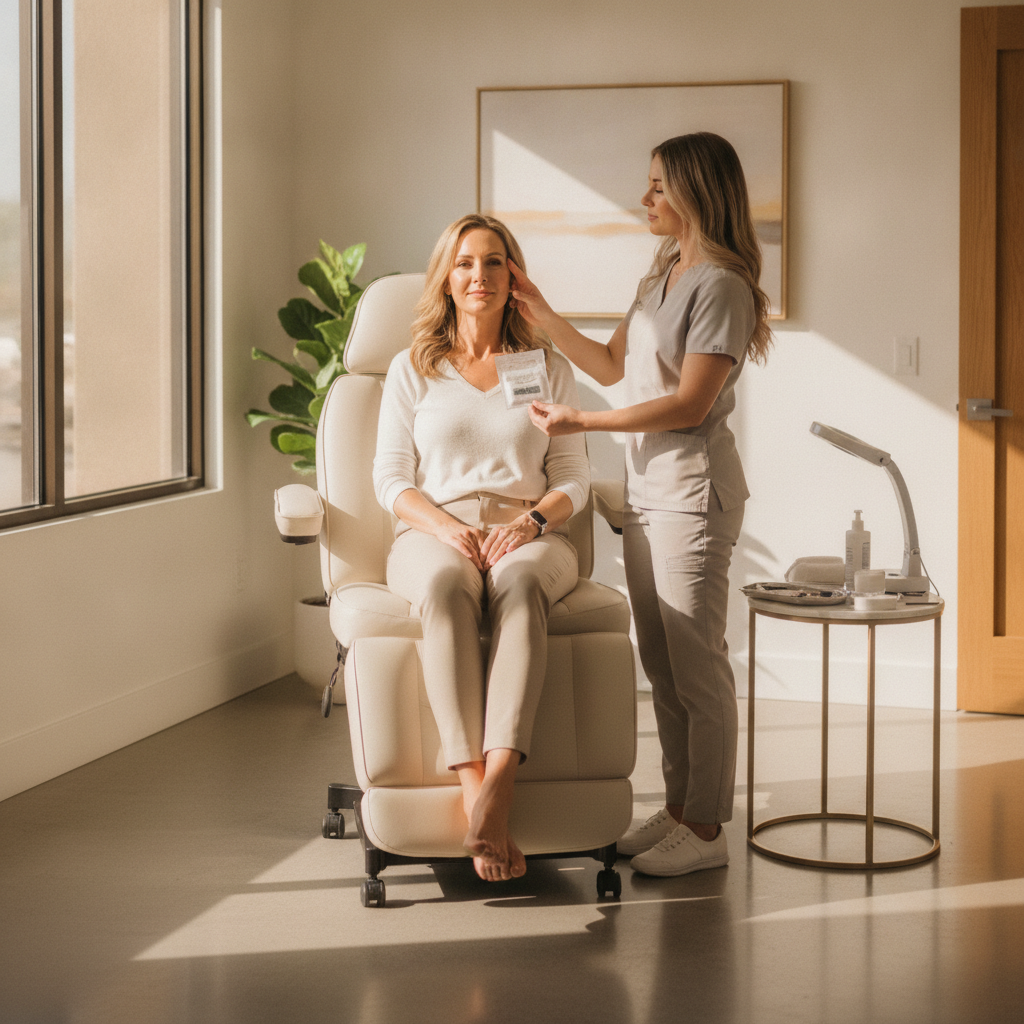
What Is PDO Thread Lift and Is It a Good Alternative to a Facelift for Residents in Gilbert and Mesa?
If you’ve noticed your jawline softening, your cheeks losing a little lift, or the skin along your neck starting to feel less firm, you may have wondered whether it’s time for a facelift — or whether there’s a better option that doesn’t involve surgery. For many people in Gilbert, Mesa, and across the East Valley, a PDO thread lift is exactly that option. It’s a minimally invasive procedure that physically lifts sagging tissue and stimulates your skin’s own collagen production, all with no incisions, no general anesthesia, and a recovery measured in days rather than weeks. This guide breaks down what threads actually are, what the process looks and feels like, who tends to be a good candidate, and how to think honestly about whether they’re right for you.
What Are PDO Threads and How Do They Work?
PDO stands for polydioxanone — the same absorbable suture material that has been used in surgical stitching for decades. In a thread lift procedure, very fine threads are inserted under the skin using a thin needle or cannula. Once in place, they do two important things: they physically gather and reposition loose tissue for an immediate lifting effect, and they trigger a wound-healing response in your skin that encourages new collagen to form around the threads as they gradually dissolve over several months.
The result is a lift that looks natural precisely because it’s working with your own tissue rather than replacing volume artificially. Different thread types are used for different purposes — some are smooth and focused purely on collagen stimulation, while barbed or cogged threads are used for actual lifting of the jowls, midface, brow, or neck. A skilled provider will often combine thread types in the same session depending on what your face needs most.
How Is a Thread Lift Different From a Surgical Facelift?
This is the question most people in Mesa and Gilbert are really asking, so it deserves a straightforward answer. A surgical facelift repositions deeper facial structures, removes excess skin, and produces results that can last a decade or more. It is a major procedure with real recovery time, real surgical risk, and a significant cost — often $10,000 to $20,000 or more at a board-certified plastic surgeon’s office in the Phoenix metro.
A PDO thread lift is not a replacement for that level of correction. If you have significant skin laxity or are hoping for dramatic, long-lasting structural change, surgery may still be the more appropriate path, and any reputable provider will tell you that honestly during a consultation.
Where threads genuinely shine is in an earlier window — when you’re starting to notice sagging but aren’t ready for surgery, or when you want to extend the results of previous work, or when you simply prefer a non-surgical approach. Threads typically last between one and two years, depending on the product used, the areas treated, and how your body responds. For many people in their late thirties through fifties, that’s a meaningful improvement without the commitment or recovery of a surgical procedure.
What Areas Can Be Treated With PDO Threads?
Threads are more versatile than most people realize. Common treatment areas include:
- Jawline and jowls — one of the most popular uses, helping restore a more defined lower face
- Midface and cheeks — lifting to restore the apple-cheek fullness that migrates downward with age
- Brow — a subtle but noticeable lift that can open up the eye area
- Neck and décolletage — improving crepey texture and mild laxity
- Nasolabial folds — softening the lines from nose to mouth
Threads are also sometimes used on the body — the abdomen, inner thighs, and arms — to address skin laxity in areas where surgical options feel extreme and non-surgical radiofrequency treatments alone may not be enough.
What Does the Procedure Feel Like — and What’s the Downtime?
Most clients are surprised by how manageable the experience is. The treatment area is numbed with a topical or injected local anesthetic, and while you may feel some pressure or tugging as threads are placed, significant pain during the procedure is not typical when it’s performed well. The appointment itself usually takes between 45 minutes and 90 minutes depending on how many areas are treated.
Afterward, you can expect some swelling, mild bruising, and tenderness for several days. Some people have minor dimpling or puckering at the insertion sites that resolves within a week or two as swelling subsides. Most clients feel comfortable returning to normal daily activities within a few days, though strenuous exercise and certain facial movements are usually restricted for the first week or two. This is a meaningful difference from surgical recovery, which typically involves weeks of restricted activity and visible bruising.
One practical note for residents here in the East Valley: if you’re scheduling treatments during the summer months, you’ll appreciate that thread lift recovery doesn’t require sun avoidance the way laser procedures do. That said, protecting your skin from Arizona sun year-round is always good practice, and your provider will give you specific aftercare instructions to follow.
How Does a Thread Lift Fit With Other Medspa Treatments?
One of the clearest gaps in how competitors in the area discuss PDO threads is the relationship between threads and the rest of a client’s aesthetic plan. Threads don’t exist in isolation — they work best as part of a thoughtful, layered approach.
For example, threads lift and reposition tissue, but they don’t restore lost volume. If volume loss in the cheeks or temples is part of what’s aging your appearance, dermal fillers like Sculptra or Radiesse may be used alongside threads for a more complete result. Sculptra in particular is a strong complement because it also stimulates collagen over time — so both treatments are working toward the same long-term goal of building your skin’s structural support from within.
Threads also pair well with neurotoxin injections. Relaxing the muscles that pull the face downward (like the depressor anguli oris, which tugs on the corners of the mouth) can help threads maintain their lift longer. Your provider should be thinking about all of these dynamics together rather than treating each service as a standalone option.
And if your primary concern is skin quality — texture, tone, fine lines — treatments like RF microneedling or CoolPeel laser resurfacing address those surface-level concerns in ways that threads are not designed to. A good consultation will help you understand which combination actually addresses what’s bothering you most.
What to Look for in a PDO Thread Provider in the East Valley
Threads require a higher level of anatomical knowledge than many other medspa services. Placement matters — thread depth, angle, and the number of threads used all affect both the result and your comfort during and after the procedure. You want to ensure your provider has specific training in thread placement, ideally with a medical director involved in oversight of the treatment protocol.
Ask whether your provider uses FDA-cleared thread products, how many thread procedures they’ve performed, and what their protocol is if you experience complications like infection or thread migration (rare, but worth discussing). A reputable provider in Chandler, Scottsdale, Gilbert, or Mesa will welcome these questions rather than dismiss them.
At Az Laser Studio & Medspa, PDO threads are offered as part of a broader menu of dermal filler and rejuvenation services under experienced medical supervision. Learn more about our team on our about page, or read what clients have experienced in our client reviews.
Frequently Asked Questions About PDO Thread Lifts in Mesa and Gilbert
How long do PDO thread results last?
Most clients see results lasting between one and two years. The threads themselves dissolve within about six months, but the collagen they stimulate continues to support your skin beyond that point. Results vary based on the treatment area, the number and type of threads used, and how your body responds over time.
Is a PDO thread lift painful?
The procedure is performed with local anesthesia, so most clients describe the sensation as pressure or mild tugging rather than sharp pain. Some soreness in the days following is normal and manageable with over-the-counter pain relief.
Am I a good candidate for a thread lift?
The ideal candidate is someone experiencing mild to moderate skin laxity — typically in their late thirties through late fifties — who wants a meaningful lift without surgery. People with very significant sagging or loose skin may get better results from a surgical consultation. Your provider will give you an honest assessment during a consultation.
Can threads be combined with Botox or filler in the same appointment?
Often, yes — though your provider may recommend staging certain treatments to avoid compromising results or increasing swelling. This is something to discuss at your consultation so you can plan your appointments strategically.
What is the cost of a PDO thread lift in the East Valley?
Pricing varies based on the number of threads used and the areas treated. Thread lifts typically range from a few hundred dollars for a targeted single-area treatment to $1,500 or more for a comprehensive facial lift. Many clients in Mesa and Gilbert take advantage of financing options to spread the cost over time. Contact us directly for current pricing and available promotions.
Ready to Find Out If PDO Threads Are Right for You?
The best way to know whether a thread lift makes sense for your face and your goals is to sit down with a provider who will take the time to actually look at your anatomy and listen to what you’re hoping to achieve — not just hand you a service menu. At Az Laser Studio & Medspa in Mesa, that’s exactly how consultations work. We serve clients from across the East Valley, including Gilbert, Chandler, Scottsdale, and beyond, and we’d love the chance to talk through your options with you.
Request your free consultation today and let’s build a plan that makes sense for you.