
What Should You Expect From a Medspa Chemical Peel in Mesa — and How Do You Pick the Right One for Your Skin?
If you’ve been thinking about a chemical peel but aren’t sure what actually happens during one — or whether you’ll be hiding from people for a week afterward — you’re not alone. Chemical peels are one of the most searched skincare treatments in Mesa and across the East Valley, yet they’re also one of the most misunderstood. The short answer is that a medical-grade peel done at a licensed medspa is nothing like a drugstore peel or even what you might get at a day spa. What it is, done right, is one of the most effective ways to address sun damage, uneven tone, texture, and persistent breakouts — especially here in the Arizona desert, where cumulative sun exposure accelerates the skin concerns most people are trying to fix.
What Makes a Medical-Grade Chemical Peel Different?
The word “peel” covers an enormous range of treatments — from the gentle glow boosters you can order online to mid-depth clinical peels that require real preparation and recovery. At a medical spa, providers work with formulations and concentrations that aren’t available over the counter, and more importantly, they assess your skin before recommending anything. That consultation piece is what separates a well-matched peel from one that irritates your skin or delivers underwhelming results.
A qualified provider will look at your skin type, your Fitzpatrick skin tone, what you’re trying to address, and whether anything in your current routine (like retinoids or certain prescription medications) might affect how your skin responds. They’ll also factor in timing — which, living in Mesa, matters more than most people expect.
The Peel Depth Question: Superficial, Medium, or Deep?
This is where most online content falls short, and where local competitors tend to give vague answers. The depth of a chemical peel determines how much it addresses, how your skin looks in the days following, and how often you can repeat it. Here’s a straightforward breakdown:
Superficial Peels
These use mild acids — typically alpha-hydroxy acids (AHAs) like glycolic or lactic acid — at lower concentrations. They work on the very surface of the skin, improving texture, brightening dull tone, and helping with mild congestion. You may notice a little tightness or light flaking for a day or two, but most people go right back to their normal lives. These are great as a regular maintenance treatment, and they pair well with HydraFacial or other skin health treatments when spaced appropriately.
Medium-Depth Peels
These penetrate deeper, targeting the upper layers of the dermis. Trichloroacetic acid (TCA) is a common agent at this level. Medium peels are better suited for more significant sun damage, moderate hyperpigmentation, fine lines, and mild acne scarring. You should expect visible peeling and some redness for about five to seven days. For someone in Chandler or Gilbert spending a lot of time outdoors, a medium peel done at the right time of year can make a noticeable difference in sun-damaged skin.
Deep Peels
Deep peels — typically phenol-based — are the most intensive option and require significant downtime and careful medical oversight. These aren’t performed at every medspa and aren’t appropriate for most skin tones. If a provider discusses deep peel options with you, make sure you understand the recovery expectations fully before moving forward.
Why Desert Climate Timing Actually Matters for Your Peel
This is a point that doesn’t come up often enough in East Valley medspa content, and it’s genuinely important. After any chemical peel — especially a medium-depth one — your skin is more photosensitive than usual. In Mesa, where temperatures regularly exceed 110°F in summer and UV exposure is intense year-round, that matters. Most providers recommend scheduling peels during cooler months (fall through early spring) when sun exposure is easier to manage and you’re more likely to stay covered and avoid peak UV hours.
That said, lighter superficial peels can be done year-round with proper SPF use and sun avoidance. Your provider should talk through this with you during the consultation — if they don’t bring it up, it’s worth asking.
What Does the Actual Treatment Feel Like?
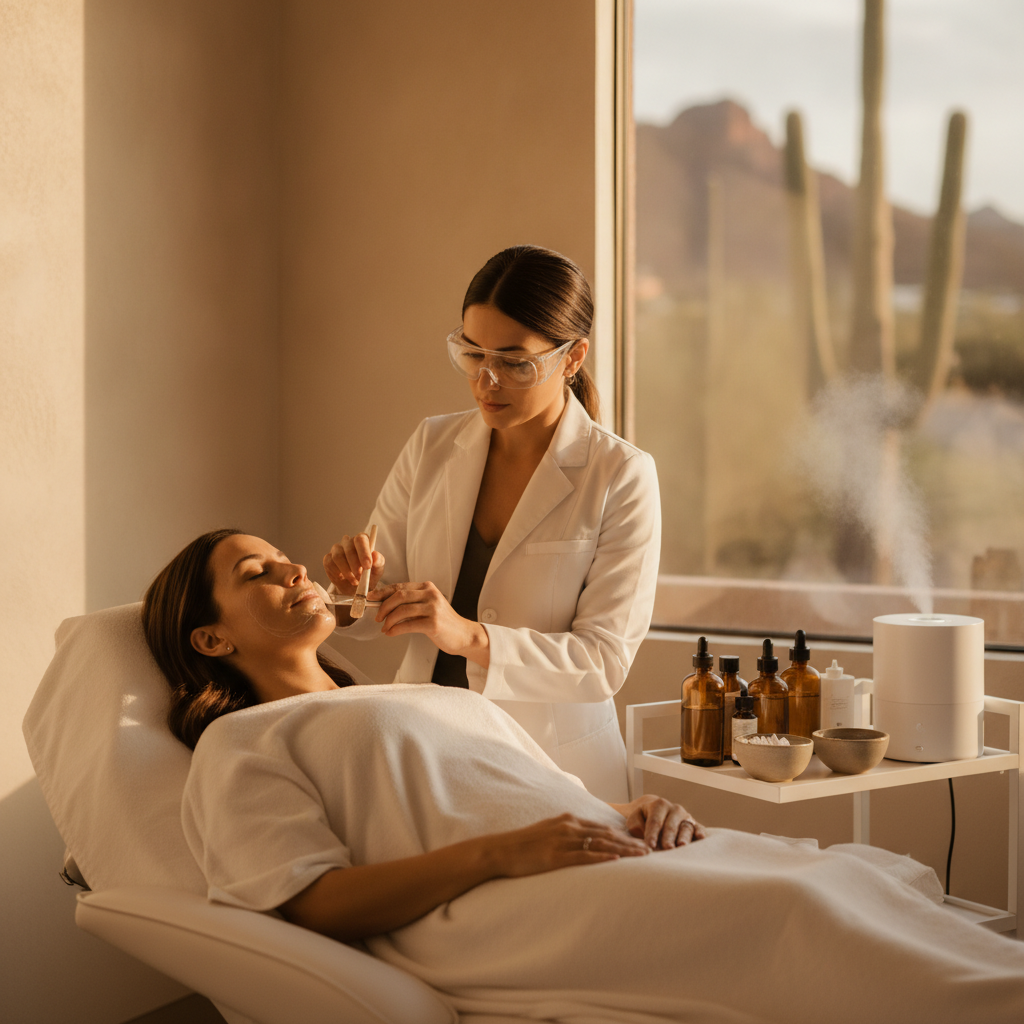
Most patients describe a mild tingling or warmth during the application of the peel solution, which typically lasts only a few minutes. For superficial peels, discomfort is minimal. Medium-depth peels may feel more intense briefly, but providers manage this carefully. The entire appointment is usually 30 to 45 minutes. Afterward, your skin may look pink — similar to a mild sunburn — and feel tight. Peeling typically begins two to four days later and resolves within a week for most mid-level peels.
You’ll be given specific post-care instructions, and following them closely is not optional — it’s what determines how well your skin heals and how visible your results are. Picking or pulling at peeling skin is the most common mistake patients make, and it can affect how evenly your skin renews.
What Skin Concerns Respond Best to Chemical Peels?
- Sun damage and hyperpigmentation — One of the most common reasons East Valley residents seek peels. Years of Arizona sun exposure can leave behind uneven tone, dark spots, and a generally tired-looking complexion that peels address directly.
- Acne and post-acne marks — Peels help clear congested pores and fade the flat discoloration left behind after breakouts heal. They won’t treat active cystic acne on their own, but as part of a broader skin plan, they’re valuable.
- Dull, rough texture — Peels accelerate cell turnover, which is the core reason your skin can feel noticeably smoother after just one or two sessions.
- Fine lines and early aging — Superficial to medium peels can soften fine surface lines, particularly around the mouth and eyes. For deeper concerns, peels often work best when combined with other treatments like RF microneedling.
How Many Sessions Will You Need?
A single peel can absolutely produce a visible improvement — you’ll likely notice your skin looks brighter and feels smoother. But real, lasting change in texture, tone, or acne scarring generally takes a series of treatments. For superficial peels, a series of four to six spaced about three to four weeks apart is a common starting point. Medium peels may be done one to three times per year depending on your skin goals. Your provider should give you a realistic picture of what to expect and when after an assessment of your skin — anyone who promises dramatic results after one session without knowing your skin is overpromising.
What to Ask Before You Book a Peel at Any Medspa
Not all providers offering peels have the same level of training or use the same quality of products. Here are a few questions worth asking:
- Who will be performing the peel, and what are their credentials?
- Do you customize the peel formula based on my skin type and concerns, or is it a standard protocol?
- How will you handle my skin if I react unexpectedly?
- What should I stop using before the treatment, and for how long?
- What does post-care look like, and what products will I need?
At a legitimate medical spa, these questions should be easy to answer. The team should be led by or supervised by a licensed medical director, and your peel should be recommended based on your individual skin — not whatever is being promoted that month. You can learn more about the team behind Az Laser Studio & Medspa on the about us page.
Frequently Asked Questions About Chemical Peels in Mesa and the East Valley
Can I get a chemical peel if I have darker skin?
Yes, but the peel type and depth need to be chosen carefully. Certain peels can trigger post-inflammatory hyperpigmentation in deeper Fitzpatrick skin tones if not matched appropriately. A knowledgeable provider will account for this during your consultation and select a peel that’s safe and effective for your complexion.
How long does peeling actually last?
For a superficial peel, light flaking may last one to three days. A medium peel typically produces more visible shedding starting around day two or three and resolving by day five to seven. Deep peels have a longer and more significant recovery. Your provider will give you a realistic timeline based on the specific treatment used.
Should I pause my retinol or retinoid before a peel?
Yes — most providers will ask you to stop using retinoids, prescription tretinoin, and certain active exfoliants for at least five to seven days before a peel. Using them right before can increase sensitivity and affect how your skin responds to the peel solution. Always disclose your full skincare routine during your consultation.
Is a chemical peel better than a laser for sun damage?
They address similar concerns but work differently and suit different people and budgets. Peels tend to be more accessible as a starting point and can be an excellent maintenance tool between laser sessions. For more stubborn pigmentation or texture issues, laser treatments may produce more targeted results. Many clients in Tempe and Gilbert use both strategically as part of a longer-term skin plan.
Does Az Laser Studio & Medspa offer financing for chemical peels?
Yes. Financing through Cherry is available, which makes it easier to commit to a full series of treatments rather than doing them one at a time. Ask about current options when you schedule your consultation.
Ready to Find Out Which Peel Is Right for You?
The best way to know where to start is a one-on-one consultation where a provider can look at your skin, ask about your goals, and recommend something that’s actually matched to you — not a generic menu item. Az Laser Studio & Medspa serves clients throughout Mesa, Chandler, Tempe, Gilbert, and the broader East Valley with medical-grade facials and chemical peels tailored to the skin concerns that matter most in the desert Southwest. Reach out through the contact page to request your free consultation and take the guesswork out of your skincare.